

A Glimpse of Humanity's Outpost
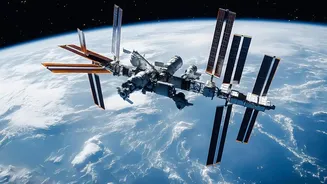
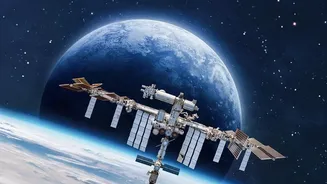
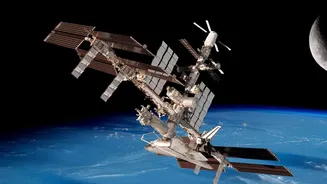
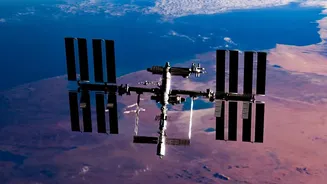
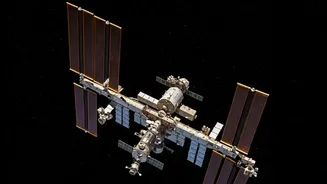
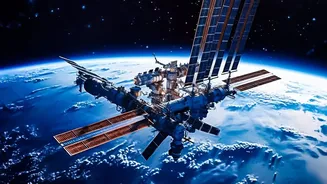
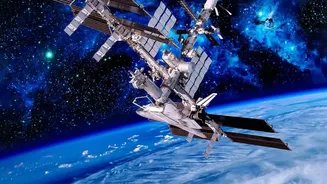
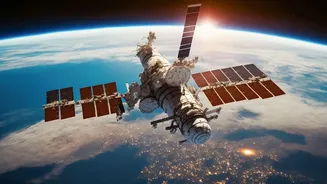
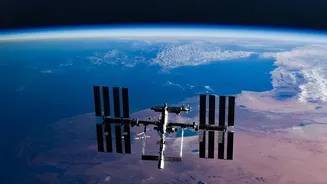
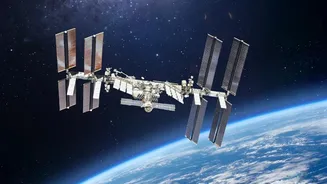
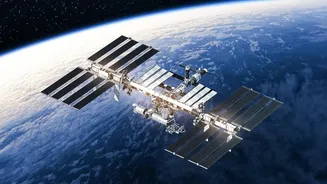
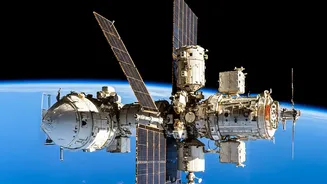
Before you look for it, it helps to know what you're seeing. The International Space Station is a massive orbiting laboratory, roughly the size of a football field. It's a joint project between five space agencies from the US, Russia, Europe, Japan, and
Canada. Continuously inhabited by astronauts since November 2000, the station serves as a home and workplace for an international crew conducting research that's impossible on Earth. Hurtling through space at about 28,000 kilometres per hour, it circles our planet every 90 minutes, meaning the crew sees 16 sunrises and sunsets each day.
The Perfect Time to Look Up
Timing is everything when it comes to spotting the ISS. The station doesn’t produce its own light; what we see is reflected sunlight. This means the best viewing opportunities happen only during the hours shortly before sunrise or after sunset. During this twilight window, the sky is dark enough for the station to be visible, but the ISS itself, flying at an altitude of over 400 kilometres, is still bathed in sunlight. It’s this contrast that makes it appear as the third brightest object in the night sky, after the Moon and Venus. You won't see it in the middle of the night or broad daylight.
Your Personal Viewing Schedule
You don’t need to be an astronomer to know when the ISS will pass over your city. NASA has a free and incredibly useful service called 'Spot The Station'. By visiting their website, you can select India from the list of countries and then find your specific city or a major one nearby. The service provides a list of upcoming sighting opportunities, including the exact time, duration, and the path it will take across your sky. You can also sign up for email or text alerts, which will notify you a few hours before the station is due to fly over. It takes all the guesswork out of the experience.
Essential Apps for Stargazers
For real-time tracking, a smartphone app can be your best friend. The official 'Spot The Station' app offers alerts and live tracking. Other popular apps like ISS Detector, Satellite Tracker, and Heavens-Above also provide precise pass predictions. Many of these apps feature augmented reality (AR) views; you simply point your phone at the sky, and the app will show you exactly where the ISS is, even before it becomes visible to your naked eye. This is particularly helpful for distinguishing it from other objects in the sky.
What to Expect During a Sighting
When you finally spot it, you'll be looking for a bright, steady point of light moving purposefully across the sky. Unlike an aeroplane, the ISS does not have flashing or blinking lights. It moves much faster than a plane, appearing to glide silently and smoothly. A typical viewing can last anywhere from one to six minutes, depending on the pass. The NASA website and tracker apps will tell you where it will first appear (for example, '10° above NNW') and where it will disappear as it passes back into Earth's shadow. Don’t expect to see the station's shape; to the naked eye, it will look like a very bright, fast-moving star.
Pro-Tips for the Best View
To make the most of your viewing, find a spot with a clear view of the horizon, away from tall buildings and bright city lights if possible. Although the ISS is bright enough to be seen from urban areas, a darker sky always enhances the experience. Give your eyes about 15 minutes to adjust to the darkness before the scheduled pass. This will make it much easier to spot the station as it emerges. Finally, consider making it a group activity. Sharing the moment with family or friends adds to the sense of wonder as you watch this beacon of human ingenuity soar overhead.