

An Ambitious New Goal: Sample Return
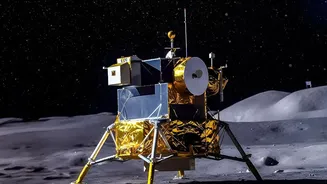
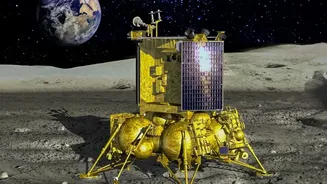
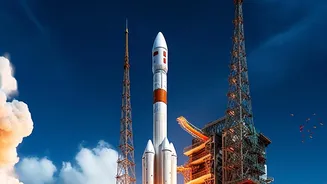
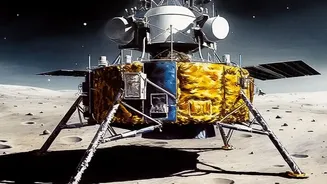
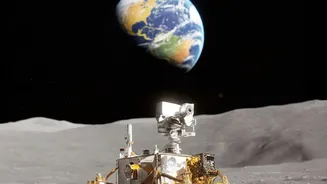
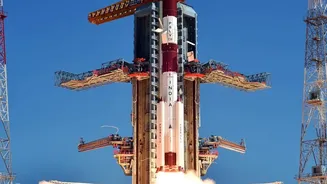
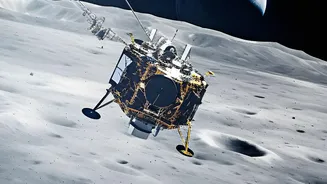
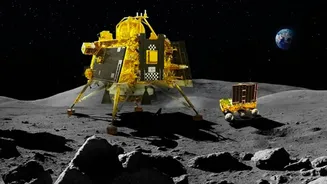
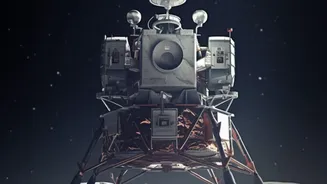
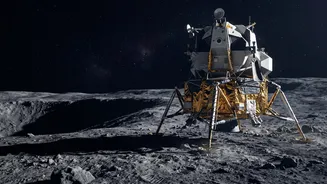
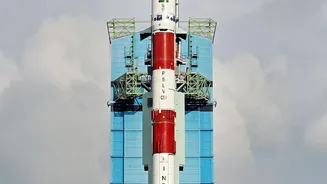
Chandrayaan-4 marks a significant leap in complexity for the Indian Space Research Organisation (ISRO). Planned for around 2028, its primary objective is to perform India's first-ever lunar sample-return. This means not only achieving a soft landing but
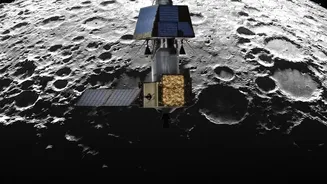
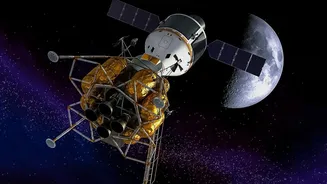
also collecting lunar soil (regolith), launching a vehicle off the Moon's surface, and safely bringing those precious samples back to Earth. The mission is incredibly complex, involving five separate modules that will perform a series of automated manoeuvres, including docking in lunar orbit. If successful, India will join an exclusive club of nations—the former Soviet Union, the United States, and China—that have accomplished this feat.
The Allure of the South Pole
The mission's target is the Moon's south pole, a region that has become a focal point for global space agencies. The reason is its unique topography. The Moon's slight axial tilt means that the floors of some deep craters near the pole have not seen direct sunlight for billions of years. These Permanently Shadowed Regions (PSRs) are among the coldest places in the solar system, with temperatures plunging low enough to trap volatile substances, most notably water, in the form of ice. While Chandrayaan-1 provided definitive proof of water's presence, Chandrayaan-4 aims to physically collect and analyse it.
Water: The Gold of the Solar System
Finding and collecting water ice is about much more than just scientific curiosity. Water is considered the most critical resource for enabling a long-term human presence on the Moon and beyond. The concept is known as In-Situ Resource Utilization (ISRU), which essentially means living off the land. Launching materials from Earth is incredibly expensive; every kilogram costs a fortune. If future lunar bases can source water locally, it dramatically reduces the cost and complexity of missions. This water could be used for drinking, growing food, and cooling equipment.
A Fuelling Station on the Moon
Beyond life support, lunar water is a potential game-changer for deep space exploration. Water (H2O) can be split into its constituent elements: hydrogen and oxygen. Oxygen is obviously essential for breathable air, but both elements are also powerful rocket propellants. By harvesting water ice, the Moon could effectively become a refuelling station for spacecraft. This would make missions to Mars and other parts of the solar system more feasible, as rockets could launch from Earth with less fuel and top up their tanks at the Moon for the next leg of their journey. Chandrayaan-4 is a crucial first step in assessing the viability of this vision.
The Challenge of Collection and Return
The technical challenge of Chandrayaan-4 is immense. The lander must touch down in the treacherous, poorly lit terrain of the south pole. A robotic arm and a drill will be used to collect both surface and sub-surface samples, as studies suggest there may be more ice buried deeper in the regolith. These samples must be transferred and sealed in a container on an ascent module. This smaller rocket will then launch from the Moon, rendezvous and dock with a transfer module waiting in lunar orbit, and begin the long journey back to Earth for a fiery re-entry and safe landing. Each step requires precision and technology that ISRO is developing and testing.
India's Future in Lunar Exploration
Chandrayaan-4 is a cornerstone of India's long-term space exploration strategy, which includes a potential crewed lunar landing by 2040. The technologies developed for this sample-return mission are directly applicable to future human missions. Furthermore, this mission is part of a broader international focus on the lunar south pole. ISRO is also collaborating with Japan's space agency, JAXA, on another mission called LUPEX (Lunar Polar Exploration), which also aims to investigate lunar water resources. While Chandrayaan-4 is an independent Indian mission, it contributes to a global effort to unlock the Moon's secrets and its resources for the benefit of humanity.