




The Case for Robotic Pioneers
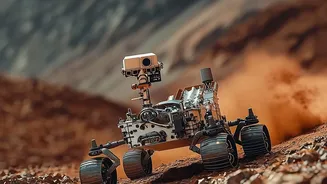
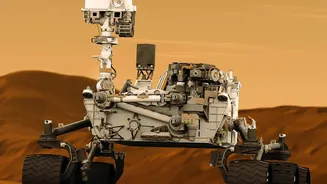
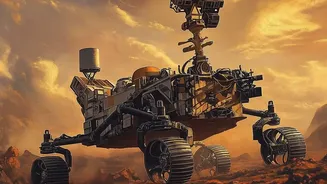
When it comes to exploring Mars, robots have an undeniable track record. They are our resilient, cost-effective emissaries on the Red Planet. Machines like the Perseverance and Curiosity rovers don't need food, water, or oxygen. They are immune to the crushing
psychological pressure of isolation and can operate for years in extreme temperatures and a vacuum. The cost difference is staggering: a robotic mission like Perseverance costs under $3 billion, whereas estimates for a crewed mission can soar into the hundreds of billions. Robots can be sent on one-way trips, eliminating the enormous complexity and fuel requirements of a return journey, and they can explore environments far too hazardous for human life.
The Irreplaceable Human Element
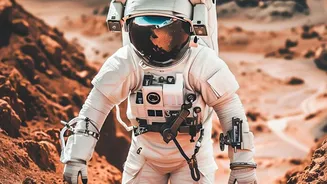
Despite the advantages of robots, there are things a human can do that no machine can yet replicate. Astronauts possess unparalleled adaptability and intuition. A geologist on Mars could analyse a rock formation and make on-the-spot decisions that would take a rover team on Earth hours or days, hampered by communication delays of up to 40 minutes for a round trip. Humans can perform complex repairs, conduct intricate experiments, and react to unexpected discoveries with a flexibility that is beyond the scope of pre-programmed automatons. To illustrate the efficiency gap, the Apollo 17 crew covered 35 kilometres on the Moon in three days, while the Curiosity rover took years to travel a similar distance on Mars. The ability to problem-solve in real-time is a uniquely human skill that could be the difference between mission success and failure.
The Radiation Showstopper
The single greatest obstacle to sending humans to Mars is radiation. Without Earth's protective magnetic field and thick atmosphere, astronauts would be bombarded by a constant stream of galactic cosmic rays (GCR) and unpredictable solar particle events (SPEs). This isn't a minor risk. During a mission that could last up to three years, an astronaut would be exposed to radiation levels hundreds of times higher than on Earth, dramatically increasing the lifetime risk of cancer. The radiation dose on a single six-month journey to Mars could be equivalent to 60% of an astronaut's entire career limit. This exposure can damage DNA, the central nervous system, and increase the risk of degenerative diseases, cardiovascular problems, and even cognitive decline. While engineers are working on advanced shielding, no current technology can completely negate this fundamental threat.
More Than Just a Long Trip
Beyond radiation, the human body itself struggles in space. The partial gravity on Mars, which is only 38% of Earth's, leads to significant health problems. Astronauts face muscle atrophy and a loss of bone density, which may not be entirely reversible. Their immune systems can be compromised, and their vision can be affected by changes in fluid pressure in the skull. Then there is the profound psychological toll. Being confined with a small crew, millions of kilometres from home, with significant communication delays, creates a high-stress environment that can lead to depression, sleep disruption, and interpersonal conflict, jeopardising the mission itself. Even the Martian dust, which contains toxic compounds like perchlorates, could pose a long-term respiratory risk if inhaled.
A Partnership for the Future
Ultimately, the debate isn't a simple 'either/or' choice. The future of Mars exploration is a hybrid model where robots and humans work in tandem. Robotic missions have been, and will continue to be, essential precursors, mapping the terrain, analysing the atmosphere, and identifying resources. The MOXIE experiment on the Perseverance rover, for example, successfully demonstrated that oxygen can be produced from the Martian atmosphere, a critical step for enabling future human missions. Future robots could be sent ahead to construct habitats, deploy power systems, and prepare a site for human arrival, reducing the risk for the astronauts who follow. Robots are the scouts, and humans are the explorers who make sense of the discoveries.