
The Journey from BS-VI to BS-VII
India implemented the BS-VI standards nationwide in April 2020, a major step that aligned the country's emission regulations more closely with European norms and significantly reduced pollutants like nitrogen oxides (NOx) and particulate matter (PM).
The government has now released draft notifications for the next stage, BS-VII, proposing a phased rollout starting with new passenger cars from April 1, 2029. This will be followed by light commercial vehicles in 2030 and heavy-duty vehicles like trucks and buses in 2031. Unlike previous transitions, this upgrade focuses less on changing fuel quality and more on advanced vehicle technology and a broader approach to what constitutes pollution.
Strengthening Real-World Testing
A key pillar of the proposed BS-VII framework is the enhancement of Real Driving Emissions (RDE) tests. While BS-VI introduced RDE testing, which measures pollutants emitted during actual road use rather than just in a lab, BS-VII aims to make it more stringent. Starting from 2030, vehicles will need to undergo RDE tests for type approval using Portable Emissions Measurement Systems (PEMS). The proposal sets a conformity factor of 1.0, meaning a vehicle's real-world emissions cannot exceed the specified laboratory limits, ensuring that the emission control systems are effective throughout a vehicle's life and under varied driving conditions.
The New Frontier: Non-Tailpipe Emissions
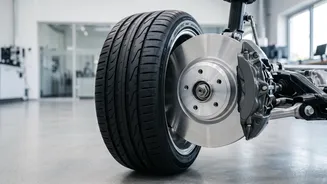
Perhaps the most groundbreaking aspect of the proposed BS-VII rules is the inclusion of non-tailpipe emissions. For the first time, regulations will target pollutants that do not come from the engine's exhaust. This includes particulate matter (PM10) generated from brake wear and microplastics from tyre abrasion. From April 2031, the draft proposes a brake-particle mass limit of 7 mg/km for petrol, diesel, and hybrid cars, and a stricter 3 mg/km for pure electric vehicles. By 2035, this limit is proposed to be a uniform 3 mg/km for all passenger vehicles. This acknowledges that even zero-exhaust-emission vehicles like EVs contribute to particle pollution.
On-Board Monitoring and Durability Mandates
The new rules also propose advanced On-Board Monitoring (OBM) systems to continuously track a vehicle's emissions. These systems will be required to detect and flag when emissions of NOx and PM exceed the legal limits, with data potentially accessible to the driver and even transmitted wirelessly in the future. Furthermore, the regulations extend to the durability of key components. For EVs and plug-in hybrids, batteries must retain at least 75% of their initial capacity after five years or 100,000 km, and 67% after eight years or 160,000 km. This ensures that the environmental benefits of these vehicles are sustained over a longer period.
Impact on Consumers and the Auto Industry
The transition to BS-VII will undoubtedly pose challenges for automakers, who have voiced concerns about the tight implementation timeline and the significant investment required for new technologies. For consumers, these changes are expected to lead to cleaner, more technologically advanced vehicles. However, this will likely come at a cost, with experts predicting an increase in vehicle prices. The stricter norms may also accelerate the decline of small diesel engines and further boost the market for hybrid and electric vehicles as manufacturers adapt to the new regulatory landscape. An 'Environmental Vehicle Passport' is also proposed to give buyers transparent information on a vehicle's emissions and efficiency.