


Holiday Rush Meets Monsoon Fury
Independence Day weekend is one of the most popular times for short getaways in India. Families and friends often plan trips to nearby hill stations, beaches, or heritage sites. However, this period also coincides with the peak of the monsoon season,
which can bring heavy rainfall, strong winds, and hazardous road conditions. The combination of increased traffic and unpredictable weather creates a unique set of challenges. The IMD consistently warns that conditions like downpours, waterlogging, and poor visibility can make travel difficult and dangerous. This makes pre-trip planning and staying updated not just a suggestion, but a necessity for a safe journey.
Your Guide to Official Weather Updates
The IMD's core advice is to stay updated, and they provide several digital tools to do just that. Instead of relying on generic weather apps, authorities recommend using official sources for accurate, real-time information. The 'Mausam' app provides city-specific forecasts, weather alerts, and radar images. For route-specific information, the IMD has a 'Highway Forecast' section on its website and a Route Forecast Tool, which gives updates for major highways. Additionally, the 'Damini' app provides lightning alerts for your location, which is crucial during thunderstorms. The UMANG app also integrates IMD services, offering another reliable channel for forecasts.
Essential Pre-Trip Vehicle Checks
Before you even think about packing, your vehicle needs a thorough inspection. A well-maintained car is your primary safety asset on rain-soaked roads. Pay special attention to your tyres; they should have adequate tread to prevent hydroplaning on wet surfaces. Check your brakes to ensure they are in optimal condition for wet-road braking. Your windscreen wipers are your first line of defence against heavy rain, so replace them if they are worn out. Finally, ensure all your lights—headlights, taillights, and indicators—are functioning correctly for maximum visibility.
Smart Driving on Wet Roads
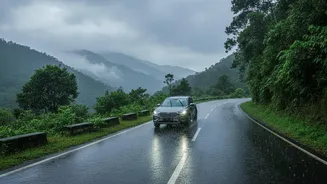
Driving in the rain requires a different mindset. The most important rule is to reduce your speed to give yourself more time to react. Maintain a greater distance from the vehicle in front of you, as braking distances are longer on wet roads. Use your low-beam headlights even during the day to improve your visibility to other drivers. Be extremely cautious of waterlogged streets; it’s impossible to know their depth or see hidden potholes. If possible, avoid them entirely. If you encounter extremely heavy rain or fog that severely limits visibility, the safest option is to pull over to a safe location and wait for conditions to improve.
Special Caution for Hilly Regions
Destinations in mountainous areas like Himachal Pradesh, Uttarakhand, and the Western Ghats require extra vigilance during the monsoon. These regions are particularly prone to landslides and flash floods, which can cause sudden and prolonged road closures. The journey itself, often on winding ghat roads, can become treacherous with rain and fog. Before travelling to a hill station, check for local advisories and be prepared for potential delays. Always stick to main highways and avoid unverified shortcuts, especially after dark. If authorities have issued warnings for specific routes, it is wisest to postpone or alter your plans.
Pack an Emergency Roadside Kit
Being prepared for the unexpected is key. Your monsoon road trip kit should include items to handle common roadside issues and emergencies. A comprehensive first-aid kit, a powerful torch, and a fully charged power bank are essential. Pack some non-perishable snacks and drinking water in case you get stranded due to a roadblock. Waterproof bags are crucial for protecting your electronic devices and important documents. It's also wise to have contact numbers for emergency services and roadside assistance saved on your phone and written down.