






The Month of Monsoon and Meaning
Karkidakam, which typically falls between mid-July and mid-August, is the final month in the Malayalam calendar. Historically, it was known as the 'Panja Masam' or the month of scarcity. Ceaseless rains often meant failed crops, a halt to outdoor labour,
and a higher risk of illness, leading people to stay indoors. This challenging period fostered a unique culture of spiritual and physical fortification. The month is also known as 'Ramayana Masam' (Ramayana Month), a time when households and temples resonate with daily recitations of the epic Ramayana, seeking spiritual strength and solace during a climatically harsh period.
An Ayurvedic Answer to the Rains
Ayurveda views the monsoon season as a time when human bodies are particularly vulnerable. The digestive fire, or 'Agni', is believed to be weak, and the body's doshas (governing energies) can easily go out of balance, lowering immunity. In response to this, Kerala’s ancestors developed Karkidaka Chikitsa, a holistic wellness regimen designed specifically for this season. Central to this practice is a special diet, and its star is the Karkidaka Kanji, a medicated rice porridge designed to heal, strengthen, and protect.
The Elixir in a Bowl
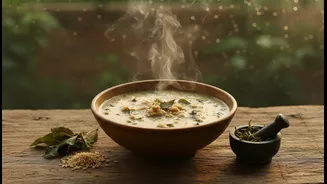
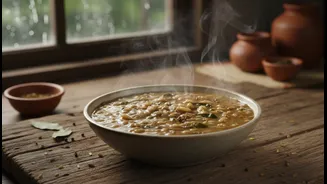
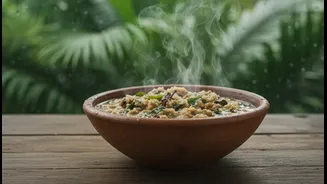
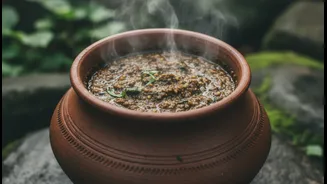
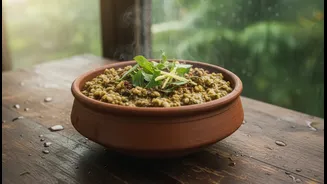
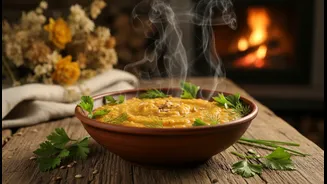
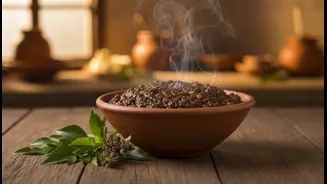
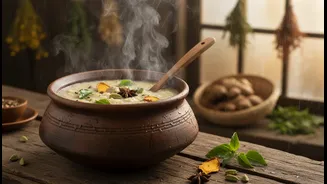
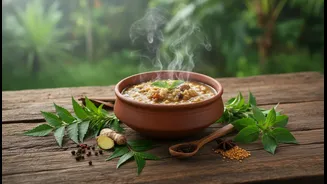
Karkidaka Kanji, also known as Oushadha Kanji (medicinal porridge), is far more than a simple gruel. It is a carefully formulated blend of ingredients chosen for their therapeutic properties. The base is often Njavara rice, a unique variety from Kerala praised in Ayurveda for being easily digestible and nourishing. This is slow-cooked with a host of herbs and spices. Common additions include fenugreek, cumin, and dry ginger to rekindle digestive fire, along with coconut milk and sometimes jaggery for taste and energy. The most vital component is a mix of medicinal herbs, which can include collections like 'Dasapushpam' (ten sacred flowers) or 'Dashamoola' (ten medicinal roots), each contributing to the porridge’s overall benefits.
Wellness, Immunity, and Rejuvenation
Consuming this warm, fragrant porridge, usually as a light dinner for a period of 7, 14, or even 28 days, is believed to offer a wealth of benefits. The primary goal is to boost immunity and protect against monsoon-related ailments like fevers and joint pain. The spices aid digestion, reduce bloating, and help the body gently detoxify by eliminating accumulated metabolic toxins, known as 'ama' in Ayurveda. For those with arthritis, the anti-inflammatory properties of the herbs can provide comfort from stiffness that worsens in the damp weather. Essentially, the kanji works to reset the body, preparing it for the year ahead.
A Tradition Thriving in Modern Times
While traditionally a homemade preparation with herbs foraged from the backyard, the custom of Karkidaka Kanji has adapted to modern life. Today, you can easily find 'Karkidaka Kanji Kits' in shops and online, containing pre-packaged mixes of the essential rice and dried herbs. This convenience has allowed the tradition to thrive, appealing to a new generation that is increasingly focused on wellness, detox, and natural health solutions. Ayurvedic hospitals and wellness centers also offer comprehensive Karkidaka Chikitsa packages, attracting people from all over who wish to experience this seasonal rejuvenation. This blend of ancient wisdom and modern accessibility ensures that the humble kanji remains a cherished part of Kerala's cultural and wellness identity.