



A Universal Mystery
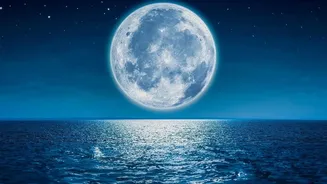
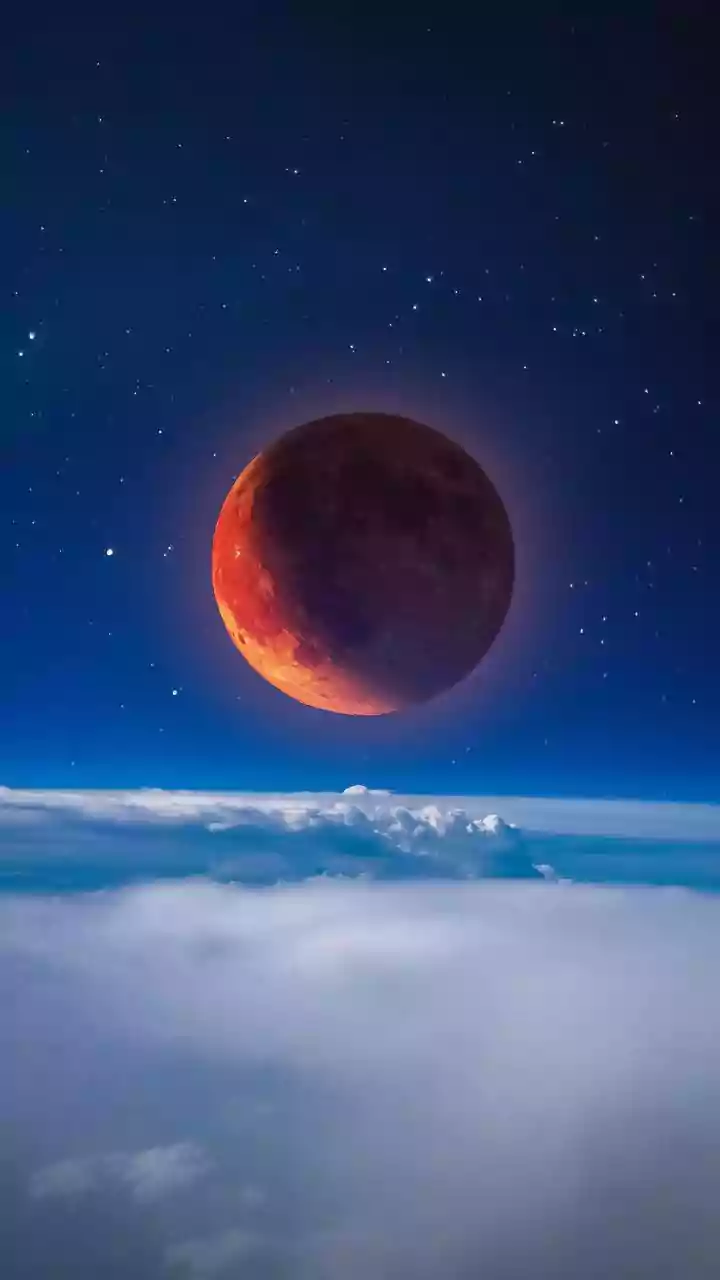
From ancient philosophers to modern sky-watchers, humanity has long been captivated by the seemingly giant moon that graces the horizon at moonrise. It can appear up to twice as large as the same moon seen high in the sky just a few hours later. For centuries,
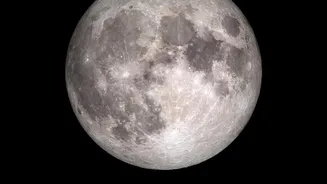
people thought the Earth’s atmosphere might be acting like a magnifying glass. However, photographs prove this is not the case. When pictures are taken of the moon at the horizon and at its zenith, its size in the photos is identical. In fact, atmospheric refraction does the opposite, making the moon look slightly squashed, not enlarged. The truth is, the moon’s angular size—the space it takes up in our field of view—remains almost constant throughout the night, at about half a degree. The mystery, then, isn’t about the moon itself, but about our perception of it.
Your Brain's Faulty Logic
The Moon illusion is a cognitive trick, rooted in how our brains process size and distance. This is often explained by the 'apparent distance hypothesis'. The core idea is that our brains don't just see size; they calculate it based on perceived distance. This relationship is sometimes called Emmert's Law: for an object with a constant angular size, if we perceive it as being farther away, our brain will conclude it must be physically larger. The moon on the horizon is a perfect example. Because of various environmental cues, our brain judges the horizon moon to be much farther away than the zenith moon, which floats in an empty, featureless sky. Even though both moons are the same size on our retinas, the brain 'inflates' the size of the one it thinks is more distant to make sense of the scene.
The Power of Reference Points
This brings us to the crucial role of visual reference points. When the moon is low in the sky, we see it in context with objects we understand: trees, buildings, and mountains. Our brain knows these things are far away and often large. Seeing the moon behind them provides a powerful depth cue. This is similar to the Ponzo illusion, where two identical lines are placed on a drawing of converging tracks. The line that appears 'farther' down the tracks is perceived as being longer. The trees and buildings on the horizon act like those converging railway lines, tricking your brain into thinking the moon is both very distant and, therefore, enormous. When the moon is high overhead, there are no such reference points. It's just a bright circle in a vast, empty expanse, so our brain has fewer cues and defaults to perceiving it as closer and, consequently, smaller.
The Flattened Sky Dome
Another part of the puzzle is that we don't perceive the sky as a perfect hemisphere. Instead, our brains treat it as a flattened dome, with the zenith (the point directly overhead) appearing much closer than the horizon. Think about clouds: clouds overhead might be just a few kilometres away, while clouds on the horizon can be hundreds of kilometres distant. Because we are used to seeing things on the horizon as being very far away, our brain applies this same logic to the moon. It places the horizon moon at the far-off edge of this flattened sky-bowl. Since the moon's size on our retina doesn't change, the brain compensates for this perceived great distance by scaling up its apparent size.
How to Break the Spell
The most compelling proof that the Moon illusion is just that—an illusion—is how easily you can break it. The next time you see a giant moon on the horizon, you can try a few simple tricks. One is to bend over and look at the moon from between your legs. This simple act removes the familiar context of the landscape and makes the moon instantly appear smaller. Another method is to roll up a piece of paper into a tube and look at the moon through it. This isolates the moon from its surroundings, stripping away the very reference points that create the illusion. Finally, you can simply hold your pinky finger out at arm's length. You'll find that the tip of your finger can easily cover the moon, whether it’s on the horizon or high in the sky, proving its size never really changed.