




Your Eyes Are The Only Tool You Need
Getting started with stargazing is simpler than you might think. The most important step is to find a location away from the glare of city lights. Light pollution washes out all but the brightest celestial objects. Head to a park, a rural area, or even
a darker corner of your own neighbourhood. Give your eyes at least 20 minutes to fully adapt to the darkness; you'll be amazed at how many more stars appear over time. While not essential, a stargazing app on your phone can act as a handy map, helping you identify what you're looking at. Just be sure to switch it to red-light mode to preserve your night vision. A comfortable chair and a warm blanket can turn a quick glance into a mesmerising evening.
Spot the Wandering Stars
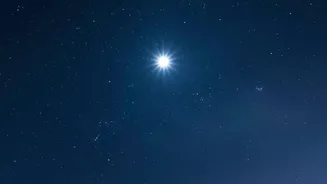
Planets are a rewarding target for beginners because they are bright and don't twinkle as intensely as stars. This October, several are easy to spot. The star of the show is Saturn, which reaches opposition on October 4th. This means Earth is passing directly between Saturn and the sun, making the ringed planet appear at its brightest and largest for the year. Look for it as a steady, pale-yellow light rising in the east around sunset and visible all night long. In the early morning hours before sunrise, you can find two other bright planets: Mars and Jupiter. Look to the east to see the reddish glow of Mars and the brilliant, steady white light of Jupiter.
Catch a Shooting Star (or Two)
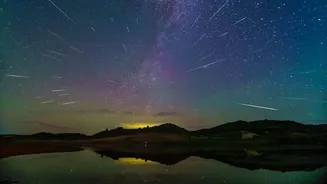
October hosts two notable meteor showers. First are the Draconids, peaking on the evening of October 8-9. This shower is unusual because it's best viewed in the early evening, just after dark, rather than after midnight. The radiant, or point from which the meteors appear to originate, is in the constellation Draco, high in the northern sky. While typically a modest shower with about 10 meteors per hour, the skies will be very dark with the new moon on October 10th, providing excellent viewing conditions. Later in the month, look for the Orionids, which peak on October 21-22. These meteors are debris from the famous Halley's Comet and can be much faster and brighter. The best time to watch is in the pre-dawn hours after the moon has set.
Connect the Dots in the Sky
Finding constellations can feel like a daunting task, but a few key patterns make it easy. This month, look for the 'W' shape of Cassiopeia in the northern sky. It's circumpolar, meaning it's visible all night from the Northern Hemisphere. Another major landmark is the Great Square of Pegasus, a large box of four bright stars high in the eastern evening sky. It serves as a great starting point for finding other objects. If you're in a dark location, use the Great Square to star-hop to the Andromeda Galaxy. It is the most distant object you can see with the naked eye and appears as a faint, elongated smudge of light. Don't look for a pinpoint star; instead, search for a large, soft glow. Binoculars will make it much more obvious.