






The High-Stakes Sowing Gamble
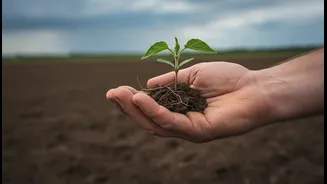
In a country where agriculture is heavily dependent on the monsoon, the timing of sowing can make or break a farmer's year. Planting too early, before the rains are sustained, can cause seeds to fail, wasting precious capital. Planting too late can mean
a shorter growing season, leading to reduced yields. This decision dictates everything from land and crop selection to the potential for profit or devastating loss. For generations, farmers relied on experience to read the signs, but as weather patterns become more erratic, this traditional knowledge is no longer enough. The entire agricultural economy is sensitive to these volatile monsoon patterns, impacting food security for over a billion people.
An Increasingly Erratic Climate
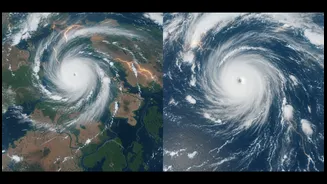
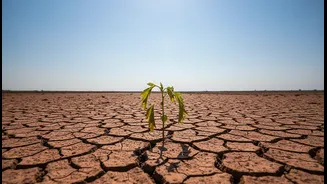
Climate change is fundamentally altering the behaviour of the Indian monsoon. Scientists have observed a significant increase in its variability, leading to long dry spells broken by short, intense bursts of extreme rainfall. This unpredictability is the new reality. Recent years have seen delayed monsoon onsets followed by sudden, intense downpours that can damage young crops. For example, a rapidly strengthening El Niño can delay rains, while record warming of the Arabian Sea fuels heavier, more intense rainfall events once the monsoon becomes active. This chaotic cycle makes it nearly impossible for farmers to plan effectively, turning each sowing season into a high-risk gamble against the elements.
The Gaps in Traditional Forecasting
While India has made strides in weather forecasting, significant gaps remain, particularly for small and marginal farmers. The India Meteorological Department (IMD) provides district and block-level forecasts, but these often lack the hyperlocal detail needed for farm-level decisions. A forecast for an entire district may not capture the micro-level variations that determine if a specific village receives rain. Furthermore, accessing and interpreting this data can be challenging, and there is often low adoption of complex weather apps among farmers with lower literacy. Forecasts with lead times beyond five to seven days have historically been less accurate, yet it is this medium-to-extended range information that is most crucial for making informed sowing decisions.
Technology as the New Rain Cloud
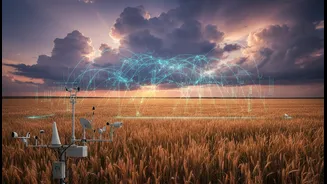
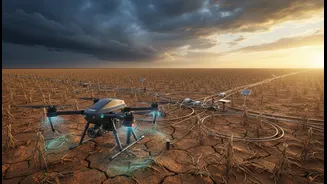
A new wave of agritech solutions is emerging to fill this critical information gap. Artificial intelligence (AI) and machine learning models are now being used to generate more accurate and localized forecasts with longer lead times. In a landmark initiative, the Ministry of Agriculture successfully delivered AI-powered monsoon onset forecasts via simple SMS to millions of farmers, giving them up to four weeks' notice. This allowed many to adjust their planting schedules accordingly. Public-private partnerships are also bearing fruit. In Telangana, a program provides farmers with advance weather alerts via WhatsApp. Apps like Meghdoot, a joint initiative by the IMD and ICAR, combine weather data with agricultural advisories in regional languages, making the information more accessible and actionable. The government's WINDS (Weather Information Network & Data System) initiative aims to create a national infrastructure of automated weather stations at the block and gram panchayat level, promising truly hyperlocal data in the future.