






A Revolution in Speed and Comfort
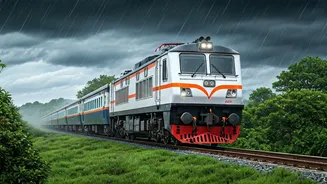
The perception of Indian train travel is rapidly changing, thanks in large part to the introduction of a new generation of semi-high-speed trains. The Vande Bharat Express, for instance, has redefined rail journeys on major routes like Delhi-Varanasi
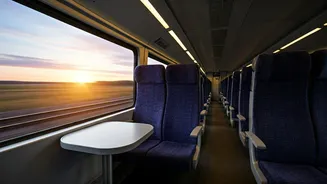
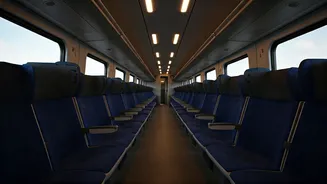
and Mumbai-Gandhinagar. These trains, capable of running at 160 km/h, significantly cut down travel time compared to older services. But it's not just about speed. The experience inside is more akin to an airplane, featuring reclining and rotatable seats, large panoramic windows, onboard Wi-Fi, and GPS-based passenger information systems. The recent introduction of Vande Bharat sleeper prototypes, designed for long-distance overnight travel, further signals a shift towards providing a premium, comfortable experience that directly competes with other modes of transport.
The Shifting Economic Equation
While flights offer speed, the total cost of air travel often extends beyond the ticket price. Factoring in expensive airport transfers, baggage fees, and pricey terminal food can significantly inflate the final bill. For short to medium distances (under 800 km), trains almost always present a more economical option. Even on longer routes, the AC-tier classes on Indian Railways can be competitive with budget airline fares, especially when flights are booked at short notice. The key difference lies in the value offered; train fares often include generous luggage allowances and the convenience of arriving directly in the city centre, saving both time and money on onward travel. This makes the overall financial calculation increasingly favourable for rail passengers.
A Greener Way to Travel
In an era of growing climate consciousness, the environmental credentials of travel are more important than ever. Here, train travel has a clear and significant advantage. On a per-passenger-kilometre basis, trains are one of the most eco-friendly ways to travel. Studies show that rail travel can produce significantly fewer CO2 emissions than flying—in some cases, up to 90% less. For example, a train journey emits on average around 19 grams of CO2 per passenger-kilometre, compared to over 123 grams for a plane. As Indian Railways moves towards complete electrification of its network, its environmental footprint is set to shrink even further, making it a responsible choice for travellers looking to minimize their impact.
More Than Just Tracks
The transformation of Indian Railways isn't just happening on the trains; it's also taking place at the stations. Under the Amrit Bharat Station Scheme, over 1,300 stations across the country are being comprehensively redeveloped. The mission aims to turn them into modern, city-centre-like hubs with improved accessibility, waiting halls, cleanliness, and passenger amenities like lifts, escalators, and free Wi-Fi. The vision includes better integration with other local transport, aesthetically pleasing designs, and spaces for local products under the 'One Station One Product' scheme. This holistic approach ensures that the passenger experience is elevated from the moment they arrive at the station to the moment they disembark, making the entire journey smoother and more pleasant.
The Journey as Part of the Experience
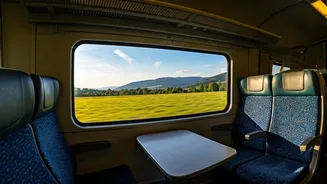
Beyond the practicalities of cost and time, train travel offers a unique quality that other modes cannot match: the journey itself becomes a memorable part of the experience. Unlike the cramped confines of an airplane, trains provide the space to walk around, work comfortably, or simply relax and watch the diverse landscapes of India unfold. There’s a social dimension, a sense of connection to the country you're travelling through that is lost at 30,000 feet. With modern amenities ensuring comfort and connectivity, passengers can use their travel time productively or simply unwind. This blend of relaxation, scenery, and practicality is a core reason why taking the train is increasingly being seen not just as a means of transport, but as a smarter way to travel.