





The Hidden World of Plant Plumbing
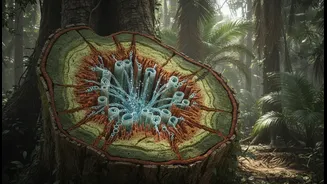
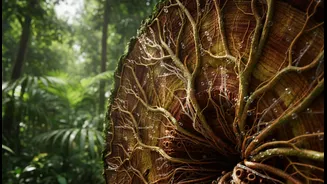
At its core, a tree is a masterful hydraulic engineer. To understand its vulnerability to heat, we first need to look at its plumbing system, known scientifically as the xylem. Think of the xylem as a massive bundle of incredibly thin straws running from
the roots to the leaves. This network’s job is to pull water and nutrients from the soil, defying gravity to nourish even the highest leaves. The engine driving this process is called transpiration—the evaporation of water from the leaf surfaces. As one water molecule evaporates, the cohesive nature of water (how molecules stick together) pulls the next one up, creating a continuous column of water under tension. This intricate system doesn't just feed the tree; it also helps cool it, much like sweating cools the human body.
When Heat Turns Up the Pressure
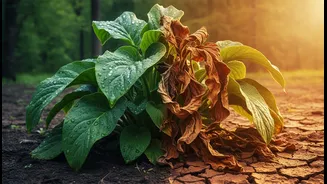
Extreme heat combined with drought puts this elegant system under immense strain. When a tree can't pull enough water from dry soil to meet the demands of a hot, dry atmosphere, the tension in the xylem can become too great. This can lead to a catastrophic failure known as cavitation. Essentially, the water column snaps, and tiny air bubbles (embolisms) form, blocking the flow. It’s similar to getting an air bubble in an IV drip, and it can be deadly for the tree. While trees have some capacity to bypass these blockages, widespread cavitation can lead to branch dieback or even the death of the entire tree. Above certain temperatures, around 30°C to 32°C, many trees also reduce photosynthesis, their process for creating energy, making them less efficient and more vulnerable.
The Indian Context: From the Ghats to the Plains
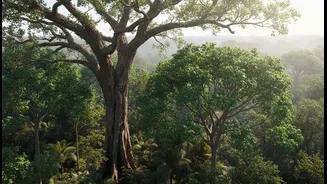
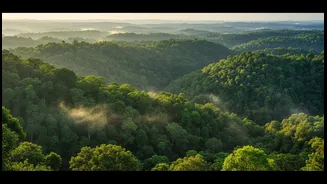
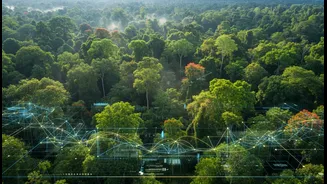
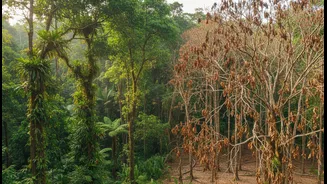
This isn't just a distant scientific concern; it's a pressing issue for India's own tropical forests, such as those in the Western Ghats and Central India. Studies show that the combination of drought and heatwaves is increasing across Peninsular and Central India. These 'double whammy' events push forests towards tipping points. Research in Madhya Pradesh's Panchmarhi Biosphere Reserve, for example, found that rising temperatures over decades have increased forest fire risk and led to a significant loss of canopy cover, especially in dry teak forests. These forests are not just collections of trees; they are critical regulators of regional climate, sources of clean water, and hotspots of biodiversity. Their health is directly linked to the stability of the monsoon and the livelihoods of millions.
What is Forest Resilience?
Resilience is a forest's ability to withstand and recover from disturbances like heatwaves and droughts. A resilient forest isn't necessarily one that never changes, but one that can adapt without collapsing. Biodiversity is a key component of this strength. A forest with a wide variety of tree species is more likely to have some that are tolerant to heat and drought. These hardier species can survive extreme events and help the forest regenerate. In contrast, a monoculture or a forest with low biodiversity is far more vulnerable. Recent analysis shows that tropical forests are struggling to adapt quickly enough to the pace of climate change. A 2026 study warned that heat waves have already pushed millions of hectares of tropical forests past their thermal limits for photosynthesis, reducing their capacity to absorb carbon dioxide.
Strengthening Our Green Lungs
Building forest resilience is a complex task that involves both conservation and forward-thinking management. It means protecting large, connected tracts of forest, as fragmentation makes them more vulnerable. It also involves actively managing forests to promote biodiversity and removing invasive species that can outcompete native trees. For India, some models predict a long-term 'greening' trend due to higher carbon dioxide levels and increased rainfall, particularly in regions like the Western Ghats and Northeast India. However, this doesn't negate the immediate risks posed by extreme heat events, which can suppress vegetation growth and increase fire risk. Scientists stress that protecting these ecosystems requires a deep understanding of their vulnerabilities, from the microscopic water-carrying cells in a single tree to the complex interactions across an entire landscape.