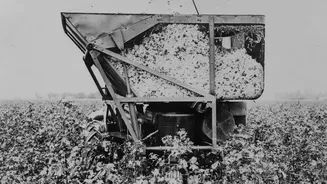








The Cradle of Cotton
Coimbatore's industrial story begins with a simple, natural advantage: cotton. Blessed with fertile black soil and a favourable climate, the region was an ideal centre for cotton cultivation for centuries. This agricultural strength laid the groundwork
for what was to come. The first major step towards industrialisation happened in 1888 with the establishment of Stanes Mill, the city’s first textile mill. However, the real boom occurred in the 1920s and 1930s. The commissioning of the Pykara hydroelectric project brought abundant and cheap electricity, a crucial ingredient that powered the city’s ambition. This energy surplus, combined with a decline in Mumbai's textile industry, allowed Coimbatore to attract investment and establish itself as a dominant force in textile manufacturing, especially high-quality yarn.
From Yarn to Foundries and Motors
The textile boom created a secondary, yet equally important, demand: the need for machinery and repairs. As hundreds of mills sprang up, small workshops and foundries emerged in the 1930s to service, repair, and eventually manufacture parts for the textile machines. This was the pivotal moment when Coimbatore's economy began to diversify. The entrepreneurial spirit, forged in the competitive textile trade, saw an opportunity. Profits from textiles were reinvested into these budding engineering ventures. Local entrepreneurs began producing the components needed by the mills, which led to a self-sustaining ecosystem of innovation. This gave birth to the city's now-famous foundry and engineering clusters, which supply castings and precision components not just for textile machines, but for a host of other industries.
The Rise of Engineering Excellence
The expertise gained from servicing textile mills quickly found new applications. The same foundries that made parts for looms began producing components for motors and pumps, industries for which Coimbatore is now a national leader. The city is often called the 'Pump City', supplying over half of India's requirements for motors and pumps. This engineering prowess also sparked a unique local innovation: the tabletop wet grinder. Marrying the region's abundance of durable black stone with its expertise in electric motors, local manufacturers created an appliance that became a staple in South Indian kitchens. Today, Coimbatore accounts for over 90% of India's wet grinder production, an industry that has even earned a Geographical Indication (GI) tag.
A Modern, Diversified Business Hub
While textiles and engineering remain pillars of its economy, Coimbatore has successfully evolved into a modern, diversified business hub. It has become a significant tier-II city for Information Technology (IT) and BPO services, with major companies like TCS, Cognizant, and Wipro establishing a strong presence in dedicated IT parks. The city's strong educational infrastructure, with numerous engineering colleges and universities, provides a steady stream of skilled talent that fuels these new-age industries. Furthermore, Coimbatore has emerged as a major centre for healthcare and automotive components, supplying parts to major manufacturers across the country.