



A Sanctuary with Royal Roots
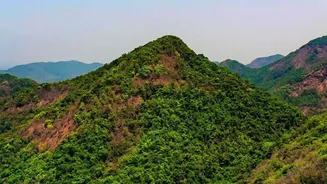
Long before it became a protected area in 1979, the sprawling, hilly terrain of Barda served as the private hunting reserve for the former princely states of Ranavav (Porbandar) and Jamnagar. Spanning approximately 192 square kilometres, this rugged landscape
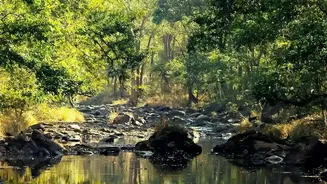
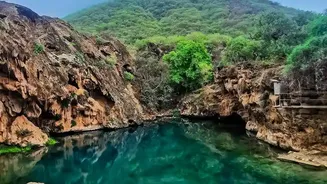
is not just a haven for animals but also a vital watershed, with the Bileshvary and Joghri rivers flowing through it. Several dams, including Khambala and Fodara, are located within its boundaries, making it a critical water source for the region. This rich history has shaped the character of Barda, preserving a wilderness that feels both ancient and remote, despite its proximity to the coastal city of Porbandar.
The Second Home for Asiatic Lions
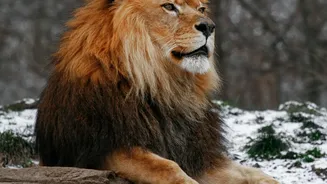
Barda's most significant claim to fame is its official designation as the second home for the majestic Asiatic lion. For decades, the world’s entire wild population of these lions was dangerously concentrated in Gir National Park, vulnerable to disease and disasters. After a male lion naturally dispersed into the area in 2023, the Gujarat Forest Department introduced several females, successfully re-establishing a population after a 144-year absence. As of 2025, the sanctuary was home to a growing population of 17 lions. This landmark conservation success under 'Project Lion' aims to create a genetically diverse and geographically separate population, ensuring the species' long-term survival.
A Diverse Array of Wildlife
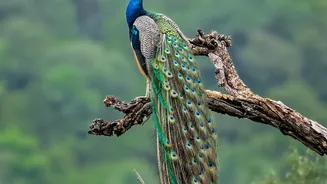
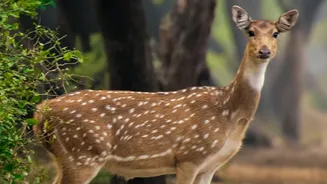
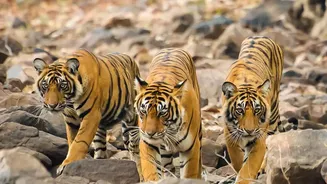
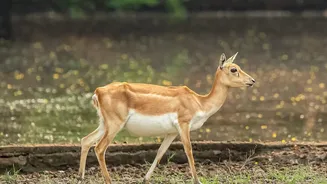
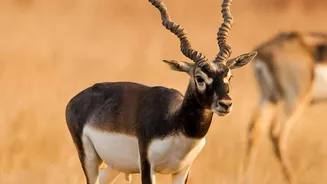
While the return of lions is a historic development, Barda is already teeming with a rich variety of fauna. The sanctuary is one of the few places in the region with a healthy population of leopards, the forest's other top predator. It is also home to a robust community of herbivores, which form a crucial prey base. Visitors can spot sambar, nilgai (blue bull), and wild boar. To support the new lion population, the forest department has also been reintroducing species like chital (spotted deer). For birdwatchers, Barda is a rewarding destination, with recorded sightings of the crested hawk-eagle and other raptors.
Unique Flora and Topography
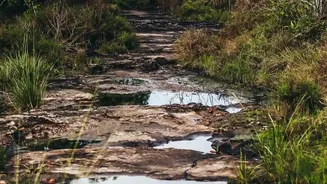
The landscape of Barda is predominantly a dry deciduous forest defined by rugged, hilly terrain. The forest cover is a mosaic of scrubland, grassy patches, and wooded hills, providing excellent cover for wildlife. With over 650 plant species recorded, it has one of the highest floral diversities in the state. Common trees include Babul, Dhav, Jamun, and Rayan, alongside valuable medicinal plants. During the monsoon, the sanctuary transforms into a lush, green paradise, a stark contrast to the drier months. This unique combination of topography and vegetation has made it a resilient and vital ecosystem for centuries.
Planning Your Visit to Barda
Visiting Barda Wildlife Sanctuary offers a chance to experience a quieter, less commercialised side of Gujarat's natural heritage. The best time to explore is during the cooler winter months, from November to February. During this period, the weather is pleasant for safaris and nature walks, and wildlife sightings are more frequent. The sanctuary recently introduced a regulated jungle safari, allowing visitors to explore the area with authorised vehicles and guides. It is highly recommended to book safaris in advance through official channels, especially during peak season. Visitors should wear muted-coloured clothing and carry essentials like water and binoculars, as facilities inside the park are limited.
How to Reach the Sanctuary
Barda Wildlife Sanctuary is well-connected to major cities in Gujarat. The nearest major town is Porbandar, located just 15 kilometres away, making it the primary gateway. Porbandar has its own airport with connections to other Indian cities, as well as a railway station. Jamnagar, another large city with an airport and rail links, is about 100 kilometres away. From either Porbandar or Jamnagar, visitors can easily hire a taxi to reach the sanctuary. The main entry points and forest department offices provide necessary permits and information for visitors.