

Punjab’s Creamy Embrace: Dal Makhani
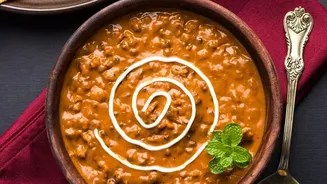
No conversation about hearty Indian food is complete without mentioning Dal Makhani. This iconic dish from the Punjab region is the undisputed king of lentil stews. Its magic lies in its simplicity and the patience required to create it. Primarily made
from whole black lentils (urad dal) and a smaller portion of red kidney beans (rajma), the ingredients are slow-cooked, often overnight, until they break down into a luscious, creamy texture. The 'makhani' in its name means 'buttery', a nod to the generous amounts of butter and cream that give the dal its signature velvety richness. While its origins are relatively modern, credited to Kundan Lal Gujral of the Moti Mahal restaurant chain around the 1950s, it has become a staple comfort food, especially during the colder months in North India. The deep, smoky flavour, achieved through hours of simmering, makes it the perfect accompaniment to a crisp naan or a simple bowl of rice.
A Royal Legacy: The Warmth of Nihari
Nihari is more than a stew; it's a piece of history. Originating in the royal kitchens of the Mughal Empire in Old Delhi or Lucknow, its name comes from the Arabic word 'Nahar', meaning 'morning'. It was traditionally a breakfast dish, slow-cooked all night to be served to emperors and soldiers after morning prayers, providing a protein-rich start to the day. Today, it's enjoyed any time, especially as a warming winter meal. The dish consists of incredibly tender, fall-off-the-bone meat, usually beef or mutton shank, cooked in a fragrant and flavourful gravy thickened with flour. The long, slow cooking process allows the bone marrow to melt into the stew, creating a uniquely rich and gelatinous texture. Spiced with a complex blend that can include long pepper (pippali), cardamom, and cloves, Nihari is a deeply satisfying experience.
Rajasthan's Fiery Spirit: Laal Maas
For those who believe winter warmth comes from a fiery kick, Rajasthan offers Laal Maas. Translating to 'red meat', this dish lives up to its name with a vibrant, scarlet gravy and an intensity, pungent heat. Traditionally made with game meat like deer or wild boar by Rajput royalty during hunting expeditions, it now commonly features mutton. The signature colour and flavour come not from tomatoes, but from a generous amount of dried Mathania red chillies, a variety native to Rajasthan known for its sharp heat and brilliant hue. The meat is slow-cooked in a yogurt-based sauce with a heavy dose of garlic, resulting in a dish that is both fiery and deeply aromatic. Eaten traditionally with thick bajra (millet) rotis during the cold, dry winter months, Laal Maas is a true reflection of its arid, martial landscape—bold, robust, and unforgettable.
Kashmir's Aromatic Jewel: Rogan Josh
From the serene valleys of Kashmir comes Rogan Josh, a lamb curry renowned for its brilliant red colour and complex, aromatic flavour profile. Despite its fiery appearance, the dish is typically more fragrant than intensely spicy. Its signature colour is derived from dried Kashmiri red chillies, which are prized for their mild heat and deep red pigment. The traditional Kashmiri Pandit version of the recipe notably omits onions and garlic, instead building its flavour on a foundation of yogurt, asafoetida (hing), and a host of aromatic spices like fennel powder, dried ginger powder, cardamom, and cinnamon. The name 'Rogan Josh' is often translated as 'red passion' or 'cooked in oil at intense heat'. The meat, usually lamb or goat, is simmered slowly in the spiced yogurt gravy until it becomes exceptionally tender, absorbing all the aromatic goodness. It's a cornerstone of the multi-course Kashmiri feast known as Wazwan and a perfect, warming indulgence for a cold day.