






The Secret of Zone 2 Cardio
You’ve probably heard trainers talk about going all-out, but the real secret to building lasting stamina lies in slowing down. Zone 2 training is exercising at a low-to-moderate intensity, typically 60-70% of your maximum heart rate. This is your “conversational
pace” zone, where you’re working hard enough to feel it but can still hold a full conversation without gasping for air. Why is this magical? At this intensity, your body becomes incredibly efficient at using fat for fuel and improves its ability to clear lactate, the substance that causes fatigue at higher efforts. Over time, this builds a powerful aerobic foundation, improving your heart health and making all your other activities feel easier.
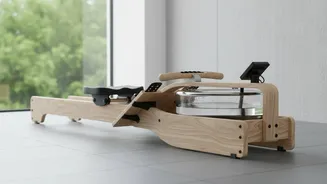
Why the Rower Is Your Best Friend
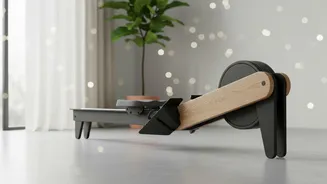
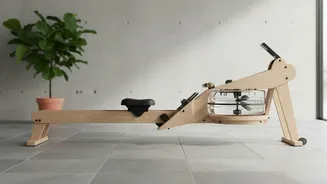
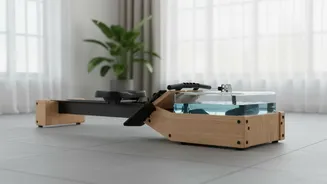
The rowing machine is the perfect partner for Zone 2 training, especially for anyone concerned about joint health. Unlike high-impact activities like running, rowing is exceptionally gentle on the knees, hips, and ankles because you are seated. It provides a smooth, rhythmic motion that minimizes stress while delivering a fantastic full-body workout. A single rowing stroke engages up to 86% of your muscles, including your legs, core, back, and arms. This means you're building strength and cardiovascular fitness simultaneously, getting a highly efficient workout without the jarring impact on your lower body.
Finding Your Personal Zone 2
To start, you need to figure out your target heart rate. The simplest way to estimate your maximum heart rate (MHR) is the classic formula: 220 minus your age. Once you have that number, your Zone 2 range is between 60% and 70% of your MHR. For example, a 40-year-old has an estimated MHR of 180 (220 - 40). Their Zone 2 would be between 108 and 126 beats per minute (bpm). Don't have a heart rate monitor? Use the “talk test.” While rowing, you should be able to speak in complete sentences. If you can only manage short phrases, you’re working too hard. If you can sing comfortably, you need to pick up the pace slightly.
Perfecting Your Rowing Form
Good form is crucial for an effective and safe rowing workout. Remember the sequence: Legs, Core, Arms, then reverse with Arms, Core, Legs. Start in the “catch” position with knees bent and arms straight. Initiate the movement by pushing powerfully with your legs. Once your legs are nearly straight, lean back slightly from your hips to engage your core. Finally, pull the handle towards your lower chest. To return, extend your arms first, then lean your torso forward, and finally bend your knees to slide back to the starting position. Keeping this sequence smooth prevents injury and maximizes power.
Your First Zone 2 Rowing Workout
Ready to put it all together? Here’s a simple workout to get you started. Aim to do this two to three times a week for the best results. Warm-Up (5 minutes): Start with some light rowing at a low stroke rate (around 18-20 strokes per minute) to get your body moving. Main Set (20-30 minutes): Settle into a steady pace that keeps your heart rate in Zone 2. Don’t focus on speed; focus on maintaining that conversational effort. Keep your stroke rate consistent, perhaps between 19-21 strokes per minute. Cool-Down (5 minutes): Gradually reduce your pace and intensity, finishing with some light rowing and gentle stretches.