


A New Window Into Alien Skies
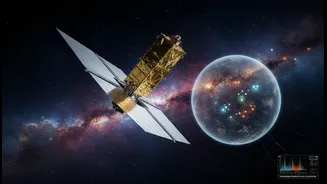
Scientists are making groundbreaking strides in understanding the atmospheres of exoplanets, worlds orbiting stars far beyond our own. Using the unparalleled power of the James Webb Space Telescope (JWST) and innovative new ground-based techniques, astronomers
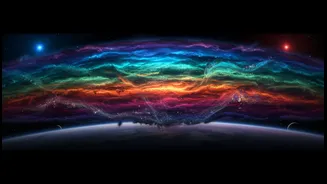
are moving beyond simply detecting these planets to truly characterising them. This new era of exploration allows for the creation of detailed chemical and molecular profiles of alien skies, offering unprecedented clues about their climate, formation, and even their potential to harbour life. These methods are so powerful they are revealing details once thought impossible to see from light-years away.
The Science of Decoding Starlight
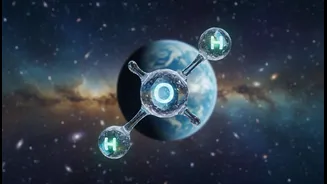
The primary method for this cosmic detective work is called transmission spectroscopy. When an exoplanet passes in front of its host star from our perspective, a tiny fraction of the starlight filters through the planet's atmosphere. Different chemical elements and molecules absorb light at specific wavelengths, leaving a unique 'fingerprint' on the light that reaches our telescopes. By analysing which colours of light are missing, scientists can determine precisely what the atmosphere is made of. The JWST, which observes in infrared light, is particularly adept at this, picking up the tell-tale signs of molecules like water, methane, and carbon dioxide that are crucial for life as we know it.
From Chemical Menus to 3D Maps
The level of detail now possible is astonishing. For a 'hot Saturn' named WASP-39 b, Webb provided a full menu of atmospheric contents, including the first-ever detection of sulphur dioxide on an exoplanet. This suggests active chemistry is being driven by the energy from its parent star, a process similar to how Earth's ozone layer is formed. Even more revolutionary is the ability to create 3D maps of exoplanet atmospheres. By using a technique called spectroscopic eclipse mapping, where they measure faint changes in light as a planet passes behind its star, scientists have built the first three-dimensional temperature map of the gas giant WASP-18b. This revealed distinct temperature zones and gave us a layered, region-by-region atmospheric profile of a world 400 light-years away.
Cloudy Mornings and Hidden Water
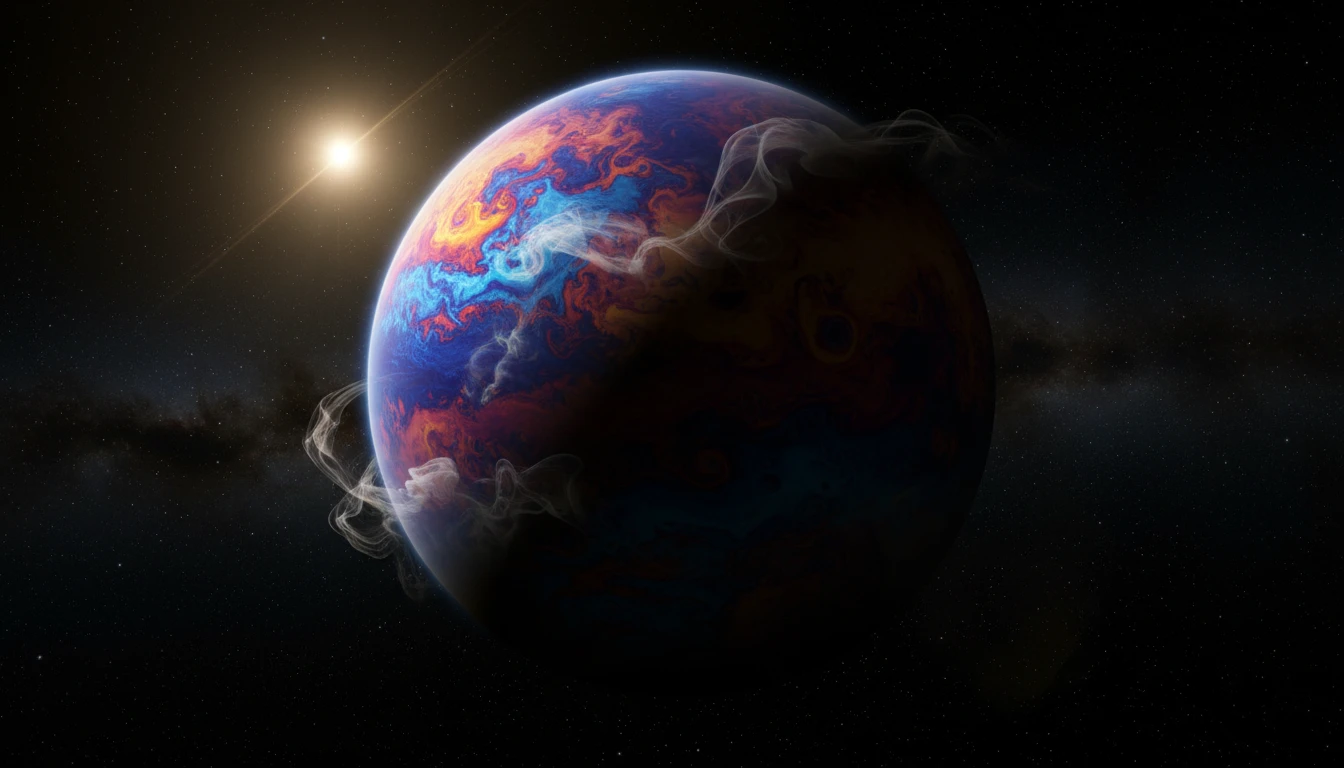
These new techniques are also revealing dynamic weather patterns. On the planet WASP-94A b, astronomers discovered a striking cycle: the mornings are extremely cloudy while the evenings are clear. It is believed that clouds form on the planet's colder night side and are then carried by winds to the morning side, where they evaporate in the heat of the star. Recent research also suggests that for a common type of planet called a 'sub-Neptune', a significant amount of water might be hidden in deeper layers, not visible in the upper atmosphere that telescopes typically probe. A new study published in July 2026 indicates that under certain conditions, water can separate from the hydrogen in the atmosphere, meaning planets could be far more water-rich than they appear.
The Search for Another Earth
Ultimately, these atmospheric studies are a critical step in the search for habitable worlds. By understanding what makes up an exoplanet's atmosphere, we can start to piece together whether it could support life. For instance, observations of K2-18b, a planet in its star's habitable zone, have revealed methane and carbon dioxide but a lack of ammonia. This specific chemical mix makes it a strong candidate for being a 'Hycean' world—a hot, water-covered planet with a hydrogen-rich atmosphere. More recently, in a landmark discovery announced in July 2026, an international team confirmed the first-ever atmosphere around a rocky, Earth-like planet in the habitable zone, LHS 1140 b, calling it a major milestone in the search for life.