






A High-Stakes Repair in Orbit
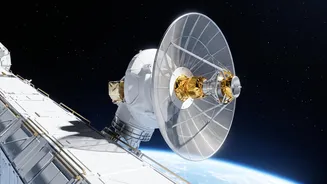
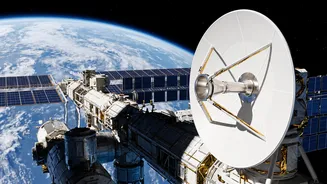
On Tuesday, August 25, NASA astronaut Anil Menon and European Space Agency astronaut Sophie Adenot performed a carefully choreographed six-and-a-half-hour spacewalk. Their mission: to replace a faulty Space-to-Ground Antenna (SGANT). This wasn't their
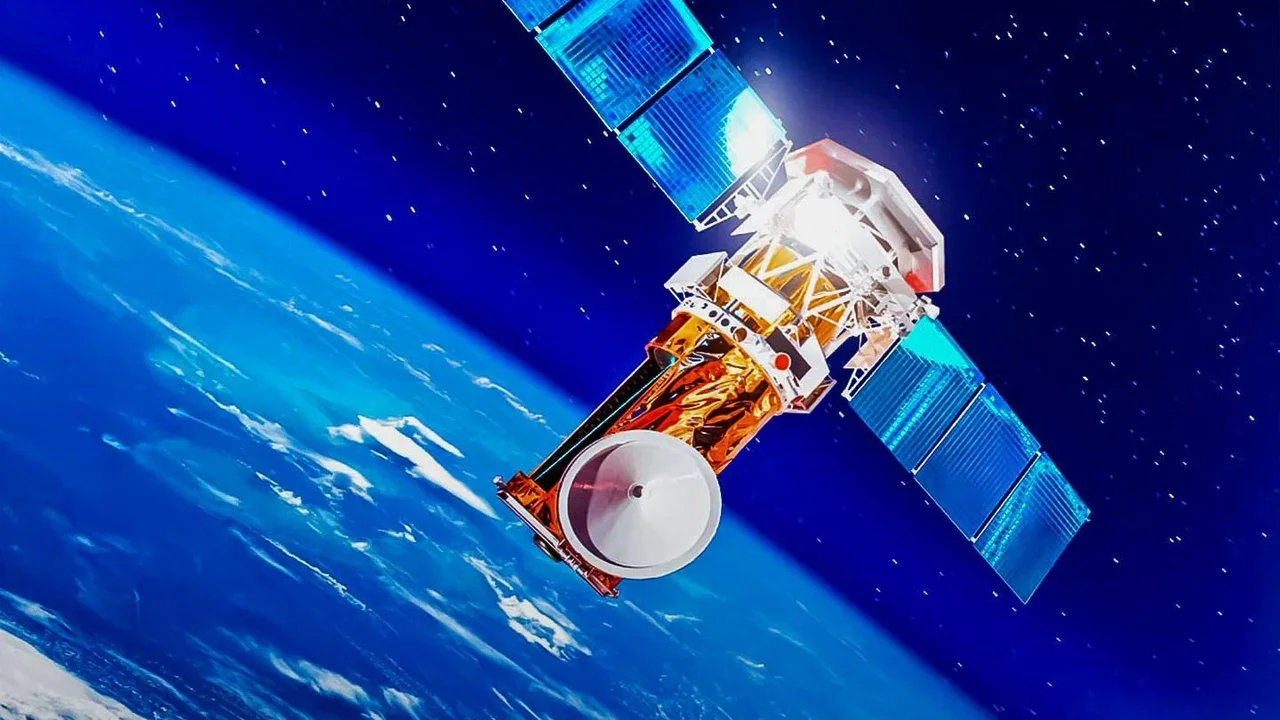
first attempt. An earlier spacewalk on August 18 saw the duo successfully remove the broken unit, but untangling stubborn cables and loosening bolts took longer than planned, forcing them to postpone the installation of the new one. On their return, with Menon secured to the end of the Canadarm2 robotic arm, they successfully installed the spare antenna. The original dish had failed last November, losing its ability to track communication satellites and forcing the station to rely on its backup. The successful replacement restored critical redundancy for high-speed data and video, prompting a celebratory call from Mission Control: "You just saved the video dish!".
More Than Just a Better Signal
Restoring a communications link might sound routine, but for the ISS, it's a lifeline. The Ku-band antennas are the primary means of sending vast amounts of scientific data from the hundreds of experiments on board back to researchers on Earth. They also transmit essential telemetry about the station's health and provide the video links that allow us to see life aboard the orbiting laboratory. This repair ensures that the flow of knowledge from the station continues uninterrupted. It's a prime example of the corrective maintenance astronauts must perform. While they train extensively for planned tasks, they also have to be ready to troubleshoot unforeseen problems that could compromise the station's mission or safety. This particular job was the 283rd spacewalk dedicated to station assembly, maintenance, and upgrades since construction began.
An Engineering Marvel Shows Its Age
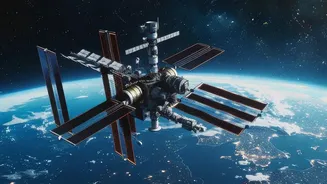
The International Space Station, with its first module launched in 1998, has far outlasted its initial 15-year design life. Like any structure approaching its third decade, it requires constant upkeep. The harsh environment of space—swinging between extreme heat and cold every 90 minutes—stresses its materials. Over the years, astronauts have dealt with a range of age-related issues, from patching minor air leaks in older modules to replacing entire cooling system pumps and upgrading battery systems. Recently, a series of spacewalks were conducted to install new, more efficient roll-out solar arrays (iROSAs) over the original ones, which had degraded over time, to boost the station's power supply. These ongoing repairs and upgrades are essential to nurse the station through to its planned retirement around 2030.
The Ultimate Handyman Job
The astronauts who live and work on the ISS are more than just scientists; they are the ultimate on-site technicians. Their job description includes being plumbers, electricians, IT specialists, and mechanics in the most challenging workshop imaginable. They perform preventive maintenance like cleaning filters and updating computer equipment, alongside complex corrective jobs like the recent antenna swap. Every task outside the station is a high-risk, physically demanding operation that requires immense precision and teamwork, not only with their spacewalking partner but with the crew inside operating robotics and the vast support team in Mission Control. Astronauts are on call 24/7, knowing that their ability to fix what's broken is fundamental to the station's survival and their own. This constant maintenance is a testament to human ingenuity, keeping a multi-billion dollar asset operational long past its warranty.