



It Starts With the Name
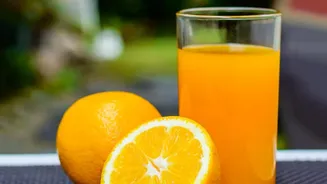
Before you even look at the ingredients, check the name on the package. Under Indian food regulations (FSSAI), the product's name tells you a lot about its contents. 'Fruit Juice' must be 100% fruit content with no added sugars. 'Fruit Nectar' contains
less juice, typically 25-50%, and may have added water and sugar to make very tart or pulpy fruits palatable. 'Fruit Drink' or 'Fruit Beverage' often has the lowest actual fruit content, sometimes as little as 10%, with water and sugar being major components. Simply choosing 'Juice' over 'Drink' is your first and easiest filter.
Scan the Ingredient List
The ingredient list is your most powerful tool. In India, ingredients must be listed in descending order by weight. For a product to be considered genuine juice, the first ingredient should be the fruit pulp or the juice itself (e.g., 'Mango Pulp,' 'Orange Juice'). If water or sugar (including high-fructose corn syrup, liquid glucose) is listed first, you are holding a fruit-flavoured beverage, not a fruit juice. The longer and more complicated the list, the more processed the product likely is.
Understand 'From Concentrate'
You will often see '100% Juice' that is also 'From Concentrate'. This is not a contradiction, but it's important to understand. Juice 'from concentrate' means the fruit was first juiced, then most of the water was extracted to create a thick syrup for easier shipping and storage. Later, water is added back to 'reconstitute' it before packaging. While it is still technically 100% juice, this heavy processing can degrade some natural flavours and nutrients, which are sometimes added back. Juice labelled 'Not From Concentrate' (NFC) has been bottled more directly with minimal processing and is generally a higher-quality, fresher-tasting product.
Decoding Flavours and Colours
If a juice needs added flavours to taste like fruit, it's a red flag. Pay attention to the terms used. 'Natural Flavouring Substances' are extracted directly from a natural source. 'Nature-Identical Flavouring Substances', a very common category in India, are chemically synthesized in a lab to be molecularly identical to the natural flavour. They are not from the fruit itself. 'Artificial Flavouring Substances' are also lab-created and have no counterpart in nature. A product with only fruit as the ingredient should not need any of these. The same goes for colours; real juice gets its colour from the fruit, not from additives like 'Sunset Yellow' or 'Tartrazine'.
Check the Sugar Content
A crucial update to nutrition labels in India is the 'Added Sugars' line, which is separate from 'Total Sugars'. 'Total Sugars' includes the natural sugar from the fruit (fructose), while 'Added Sugars' tells you how much sugar was put in during processing. A quality 100% juice should have 0 grams of added sugar. Be wary of a long list of different sugars like dextrose, maltose, or corn syrup, which is a technique to keep 'sugar' from being the first ingredient. According to FSSAI rules, if a reconstituted juice contains more than 15g/kg of added sweeteners, it must be labelled as a 'Sweetened Juice'.