

Ghent, Belgium: The Fairytale Alternative
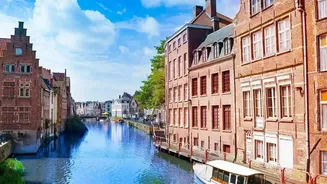
While many travellers flock to Bruges, the nearby city of Ghent offers a similar medieval charm with a more vibrant, lived-in feel. Home to a large student population, Ghent buzzes with energy. Its historic centre is a stunning tapestry of canals, cobbled
lanes, and architectural marvels like the Gravensteen, a formidable 12th-century castle complete with a moat right in the city. Climb the Belfry for panoramic views, admire the world-renowned Ghent Altarpiece in St. Bavo's Cathedral, and then lose yourself in the charming Patershol neighbourhood, known for its excellent restaurants. The city is incredibly walkable, but a boat tour along the Graslei and Korenlei quays offers a picture-perfect perspective of the historic guildhalls that line the waterfront. Ghent delivers the quintessential Belgian experience—great beer, delicious food, and stunning scenery—with fewer crowds and a more authentic local atmosphere.
Ljubljana, Slovenia: Europe's Green Gem
Slovenia's capital is a city that immediately charms visitors with its relaxed pace and stunningly green landscape. Named the European Green Capital in 2016, Ljubljana's city centre is largely car-free, making it a delight to explore on foot or by bike. The Ljubljanica River flows through the heart of the city, its banks lined with bustling cafes and restaurants. Architect Jože Plečnik left his mark all over the city, most famously with the iconic Triple Bridge. A funicular or a pleasant walk will take you up to Ljubljana Castle, which sits on a hill overlooking the city and offers beautiful views. Don't miss the vibrant Central Market, the mythical Dragon Bridge, or the alternative culture hub of Metelkova. Ljubljana is also a perfect base for day trips to iconic Slovenian sights like Lake Bled and the Postojna Caves.
Bologna, Italy: The True Food Capital
While Rome, Florence, and Venice draw the masses, savvy travellers head to Bologna, affectionately known as 'La Grassa' (the fat one) for its rich culinary heritage. This is the heart of the Emilia-Romagna region, the birthplace of iconic Italian foods like Parmigiano Reggiano, Prosciutto di Parma, traditional balsamic vinegar, and of course, the original bolognese sauce, known locally as ragù. Beyond its food scene, Bologna is a beautiful city of terracotta-roofed buildings and endless porticoes—covered walkways that stretch for over 62 kilometres. You can explore historic food markets like the Quadrilatero, climb the medieval Asinelli Tower for breathtaking views, and wander through Piazza Maggiore, the city's main square. Unlike its more tourist-heavy counterparts, Bologna offers a more authentic slice of Italian life, where the focus is on enjoying unhurried meals and soaking in the lively atmosphere.
Gdańsk, Poland: The Baltic Jewel
Situated on the Baltic coast, Gdańsk is a city with a rich and complex history that has been beautifully reborn. Almost entirely rebuilt after its destruction in World War II, its Main Town now boasts rows of colourful, narrow houses with Dutch-inspired facades that line the Royal Route. The Motława River embankment is a highlight, featuring the iconic Żuraw, a massive medieval wooden crane. Walk down the picturesque Mariacka Street, famous for its amber shops, to the imposing St. Mary's Church, one of the largest brick churches in the world. For history buffs, the European Solidarity Centre offers a compelling look at the trade union movement that helped topple communism in Eastern Europe, while the Museum of the Second World War provides a sobering account of the conflict's origins. With its unique maritime feel and historical weight, Gdańsk is a compelling alternative to more frequented Central European cities.