




Saturn: The Jewel of the Night
The undeniable star of the late August sky is the planet Saturn. Now shining brightly, the ringed planet is visible for most of the night, making it an easy and rewarding target for skywatchers. You can find it as a steady, yellowish point of light that
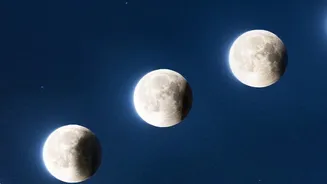
doesn't twinkle like a star. While it is impressive to the naked eye, even a basic pair of binoculars will stabilize its light, and a small telescope will begin to reveal its most famous feature: its magnificent rings. For a special treat, look for it between August 28 and August 31, when the bright Moon will be seen passing near the planet, creating a beautiful pairing in the sky. This celestial rendezvous is a perfect photo opportunity and an easy way to confirm you've found the solar system's famous gas giant.
The Fading Embers of the Perseids
The famous Perseid meteor shower delivered its spectacular peak in mid-August, but the show isn't entirely over. The shower remains active until about August 24, meaning you still have a chance to catch some of its lingering magic. While the rate of meteors will be much lower than during the peak, patient observers can still be rewarded with the occasional bright streak of light. For your best chance, find a dark location away from city lights after midnight. Lie back, look towards the northeast, and allow your eyes at least 20 minutes to fully adjust to the darkness. Each shooting star you see is a tiny piece of debris from Comet Swift-Tuttle burning up in our atmosphere, a fleeting farewell to one of the year's best celestial events.
The Summer Triangle and a Celestial Teapot
Even if you're new to stargazing, there are giant patterns in the sky that are easy to spot. Look almost directly overhead for the Summer Triangle, an enormous triangle made of three of the brightest stars in the sky: Vega, Deneb, and Altair. These three stars are so bright they are visible even from light-polluted urban areas. Once you've found the triangle, turn your gaze towards the southern horizon. Here you'll find the constellation Scorpius, known in India as Vrischik, which looks like a large, cosmic fishhook. Just to its left is the constellation Sagittarius, or Dhanu, whose brightest stars form a shape that looks remarkably like a teapot. Finding this celestial teapot is key to locating our galaxy's magnificent core.
Glimpse the Heart of the Milky Way
Late August offers a prime window for one of the most breathtaking sights the night sky has to offer: the core of our own Milky Way galaxy. To see it, you must escape the glare of city lights and find a truly dark location where the sky is unpolluted. From such a spot, the Milky Way reveals itself as a hazy, glowing band of light stretching across the sky. The brightest, densest part of this band is located in the direction of the constellation Sagittarius. That teapot shape you found earlier? The steam rising from its spout points directly towards the galactic centre. What you are seeing is the combined light of billions of distant stars, a view that is both humbling and awe-inspiring. For photographers, this is the best time of year to capture stunning images of our cosmic home.
A Morning Date with Mars
If you are an early riser, the pre-dawn sky has a treat just for you. The planet Mars is currently visible in the hours before sunrise, appearing as a distinct and steady reddish-orange point of light in the eastern sky. Unlike the shimmering of distant stars, Mars shines with a constant, unwavering glow. Its tell-tale colour makes it relatively easy to distinguish from its stellar neighbours. As you watch the sky slowly brighten before the Sun appears, spotting the Red Planet is a simple and serene way to start your day. It’s a great reminder that our neighbouring worlds are out there, following their own orbits around the Sun.
Tips for Your Stargazing Session
To make the most of your night under the stars, a little preparation goes a long way. The single most important factor is to get away from city and town lights. The darker your location, the more you will see. Consider visiting one of India's designated dark sky locations like Hanle in Ladakh or exploring areas in the Rann of Kutch or Spiti Valley for an unforgettable experience. Once you're at your spot, turn off all lights, including your phone screen, and give your eyes about 20-30 minutes to fully adapt to the dark. You'll be amazed at how many more stars become visible. Using a stargazing app on your phone with a red-light mode can help you identify planets and constellations without ruining your night vision.