





A 'Tsunami' Hitting the Global Economy
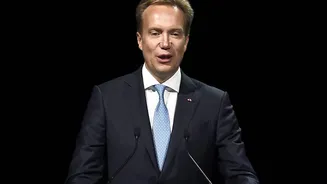
International Monetary Fund (IMF) Managing Director Kristalina Georgieva has described artificial intelligence as a 'tsunami' poised to hit the global labour market. In recent statements, including those at the annual IMF and World Bank meetings, she
has stressed that while AI offers immense opportunities for productivity and growth, it also poses significant risks that could worsen inequality and cause widespread job disruption if left unmanaged. The IMF’s analysis suggests that AI will affect nearly 40% of jobs globally, a figure that jumps to 60% in advanced economies. Georgieva's message is clear: the world must act decisively to build guardrails for a technology evolving at a breakneck pace.
The Promise of a Productivity Boom
The upside of AI is a potential productivity surge that the global economy desperately needs. The IMF estimates that AI investment could boost annual world growth by up to half a percentage point, which Georgieva equates to adding an economy the size of the ASEAN bloc to the world over a decade. This boom is fuelled by massive investments in AI infrastructure, which are already propping up global growth forecasts despite other economic headwinds like high energy costs and geopolitical conflict. The investment scale is expected to exceed historical spending on railroads, electricity, and the internet combined. For workers with in-demand skills that complement AI, this could mean higher productivity and better wages, which in turn could boost demand for other services in the economy.
The Risks: Job Disruption and Inequality
The primary concern voiced by the IMF chief is the profound disruption to labour markets. For about half the jobs exposed to AI, the technology could take over key tasks currently performed by humans, leading to lower demand for labour, reduced wages, and fewer hires. In the most extreme cases, some jobs may disappear entirely. This particularly threatens middle-skilled jobs and entry-level positions, creating barriers for young workers. Georgieva warns this could dramatically worsen inequality, not just between high-skilled and low-skilled workers, but also between nations. Countries with the infrastructure, capital, and skilled labour to adopt AI—like the US, China, and India—are set to benefit most, while many developing economies risk being left further behind.
What 'Responsible Oversight' Looks Like
So, what does the IMF propose? Georgieva has advocated for a blend of industry self-regulation and government oversight. She argues that governments are not well-placed to regulate the rapidly changing technology on their own, but that an ethical foundation is essential. This involves creating 'common sense standards' and safety nets. Specific policy recommendations include investing in digital infrastructure and education, retraining vulnerable workers, and creating flexible labour markets. She has also called for an international body, akin to the IPCC for climate change, to provide a scientific consensus on AI risks. The goal is to create rules that allow innovation to flourish while protecting society, a challenge she likens to building barriers for Formula One cars to protect the audience.
Financial Stability and India's Stake
Beyond jobs, the IMF has also flagged financial stability risks. The massive investment boom in AI is creating a concentration of capital in a few large companies and economies. Should the promised productivity gains not materialize as quickly as hoped, a market correction could send shocks through the global financial system. For a major economy like India, which the IMF projects will be the world's fastest-growing, the stakes are enormous. Georgieva has specifically named India, alongside the US and China, as one of the key countries with a large AI sector that should be involved in shaping global governance. As India continues to invest heavily in its digital infrastructure and skilled workforce, navigating the opportunities and risks outlined by the IMF will be critical to ensuring the AI transition is inclusive and protects its economic stability.