


The Problem with Current Batteries
Electric vehicles predominantly use lithium-ion batteries. While powerful, they have a well-documented weakness. They contain a liquid electrolyte that allows charged particles to flow between the anode and cathode. This liquid is highly flammable. If
a battery is damaged or short-circuits, it can lead to a dangerous situation known as 'thermal runaway,' where the battery overheats and catches fire. This risk necessitates heavy, complex, and expensive cooling and safety systems in every EV. Furthermore, the materials used, like lithium, cobalt, and graphite, are often sourced through mining operations that have significant environmental and ethical implications, creating a sustainability paradox for a technology meant to be green.
A Solution from the Farm
Scientists and startups are now turning to an unlikely source for a solution: agricultural waste. Materials like lignin, a complex polymer that makes plants rigid and is a major byproduct of the paper and pulp industry, are being transformed into key battery components. Research has shown that lignin can be processed into a stable, solid-state electrolyte. Unlike flammable liquids, these solid materials are inherently safer and drastically reduce the risk of fire. This innovation isn't limited to lignin; researchers are also exploring everything from tree bark tannins to food waste fibres and plant gums to build various parts of a battery, from anodes to binders. This approach tackles the waste problem head-on, particularly relevant in agricultural economies like India where crop residue burning is a major source of pollution.
How It Creates a Safer Battery
The key to the safety improvement lies in replacing the volatile liquid electrolyte with a solid, plant-based polymer. Solid-state electrolytes are not flammable, which immediately eliminates the primary cause of battery fires. This could allow manufacturers to design simpler, lighter, and potentially cheaper battery packs, as the need for bulky and complex thermal management systems would be significantly reduced. Furthermore, research into lignin-based components shows they offer excellent thermal stability, meaning they perform well without generating excessive heat even under high-power, fast-charging conditions. One company, Allotrope Energy, developed a lignin-based material that enables a lithium-carbon battery to recharge in about 60 seconds without degrading the battery's lifespan or creating heat management issues.
The Circular Economy Advantage
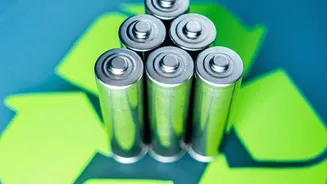
This innovation creates a powerful circular economy. It takes agricultural byproducts, which are often either burned or considered low-value waste, and upcycles them into a critical component for high-tech energy storage. Companies are already investing in this vision. For example, major pulp producers are building facilities to refine lignin from their waste streams specifically for use in batteries. For a country like India, which has both a massive agricultural sector and ambitious EV goals, this technology could be transformative. It offers a path to reduce reliance on imported battery materials, create new revenue streams for the agricultural sector, and solve the environmental problem of stubble burning all at once. The goal is to create batteries that are not only greener to make but also potentially biodegradable or easier to recycle at the end of their life.
The Road Ahead
While incredibly promising, these plant-based batteries are not yet on the market. Most of the breakthroughs are still in the research and development phase, with scientists working to optimize performance, lifespan, and cost-effectiveness for commercial scale-up. Some technologies are closer to reality than others, with companies demonstrating proof-of-concept and seeking third-party validation for their performance claims. The initial applications might be for stationary energy storage systems, where size and weight are less critical than for vehicles. However, the direction is clear: the future of batteries is likely to be less about mining finite resources and more about harnessing abundant, renewable materials from the world around us.