


Gaze upon the Milky Way's Core
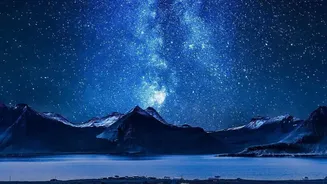
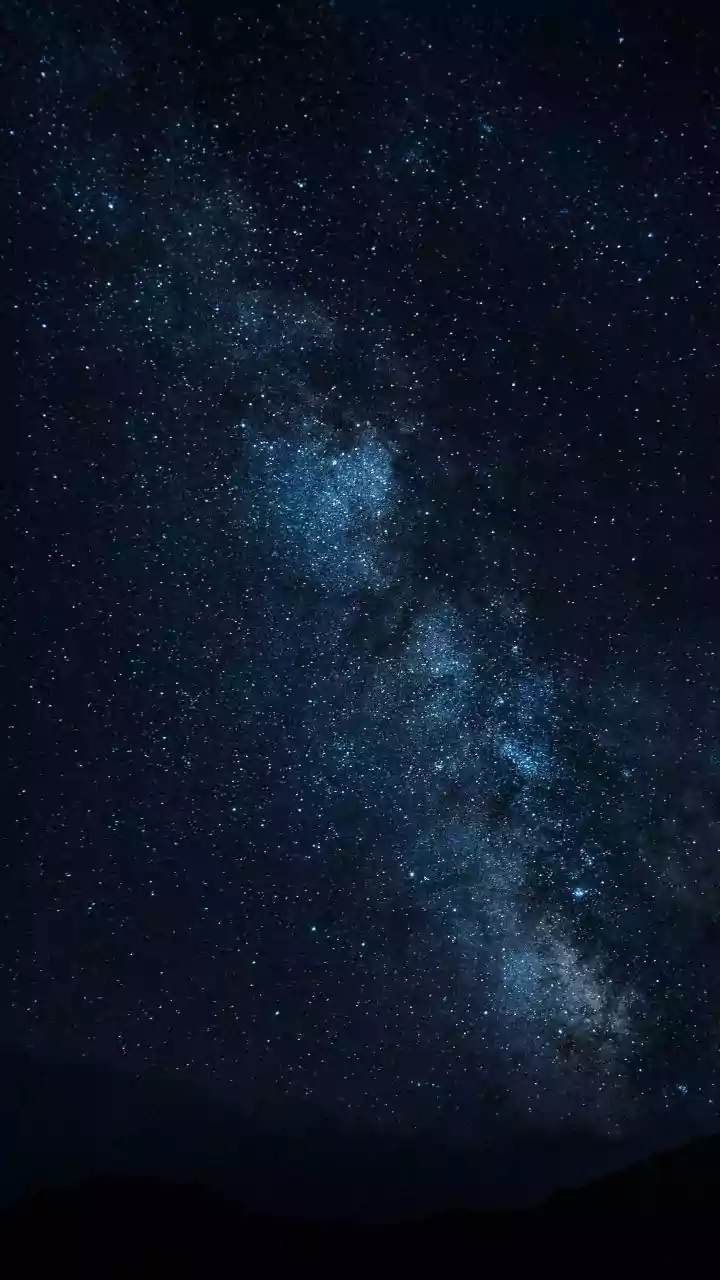
August is one of the best months of the year to see the heart of our own galaxy. Following the dark, moonless nights of the mid-month, the sky is perfectly primed for viewing the galactic core. From a location with minimal light pollution—away from the glare
of city lights—you can see it with the naked eye as a luminous, textured band of light stretching across the sky. This river of stars, dust, and gas appears most vibrant from June to August, appearing as a vertical column of light in the southern sky during the middle of the night. To find it, look towards the south. For those in truly dark locations like Ladakh or the Rann of Kutch, the view can be breathtaking, revealing the dense starfields and dark dust lanes that make up our cosmic home. No telescope is needed; just find a dark spot, let your eyes adjust for about 20 minutes, and look up.
Navigate with the Summer Triangle
High overhead in the August night sky is one of the most recognisable star patterns of the season: the Summer Triangle. This is not a constellation, but an asterism, formed by three brilliant stars from three different constellations. The brightest of the trio is Vega, a brilliant blue-white star in the constellation Lyra. Below it and to the east is Deneb, the tail of Cygnus, the Swan. The third corner is marked by Altair, the brightest star in Aquila, the Eagle. You can't miss this giant celestial triangle. It's a fantastic guidepost for amateur astronomers. Once you've located it, you can easily trace the path of the Milky Way, which flows right through it, from Deneb down towards the southern horizon. The triangle is prominent as soon as darkness falls and remains visible for most of the night.
Spot Saturn, the Ringed Jewel
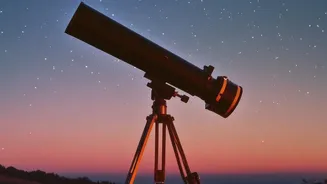
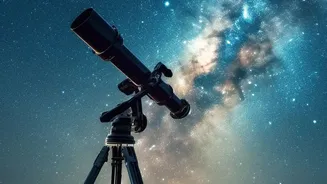
While the famous ringed planet, Saturn, will reach its brightest point for the year at its opposition in early October, late August offers a fantastic preview. Throughout the end of the month, Saturn will be visible for most of the night, rising in the east around sunset and making its journey across the sky. The planet will be located in the constellation Cetus and will be easily visible to the naked eye as a steady, bright, yellowish point of light. While you can see the planet without any equipment, even a small telescope or a good pair of binoculars will begin to reveal its most famous feature: its magnificent rings. The planet will appear at its largest and brightest around midnight, when it is highest in the sky. Keep an eye on the sky between August 28 and 31, when the bright Moon will appear to pass near Saturn, making for a beautiful sight.
A Dance of the Planets
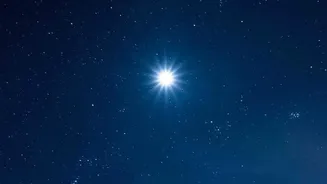
Saturn isn't the only planet gracing our skies. Venus is a dazzling beacon in the western evening sky, appearing shortly after sunset. On the other side of the night, Mars makes its appearance in the pre-dawn hours. The reddish planet will be visible in the eastern sky before sunrise. While some may have heard of a grand 'six-planet alignment' in mid-August, spotting all of them is a challenge. Jupiter and Mercury will be extremely low on the eastern horizon just before the sun rises, making them very difficult to see against the morning twilight for most observers. Your best bets for easy planet-spotting are the brilliant Venus in the evening and the distinct reddish hue of Mars in the morning.
A Note on the August Moon
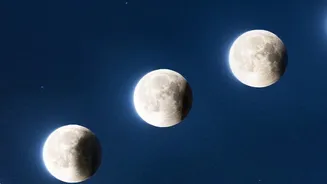
The Moon itself offers some subtle beauty. Around August 21, a slender crescent Moon could be spotted near the planet Mercury, though this pairing will be very low on the eastern horizon just before sunrise. A more accessible event occurs at the end of the month with the full 'Sturgeon Moon'. This full Moon will undergo a deep partial eclipse on August 28, where most of its surface will be covered by Earth's shadow. Unfortunately for observers in India, the entire eclipse will happen while the Moon is below the horizon, so it will not be visible from the subcontinent. However, you can still enjoy the sight of the full Moon rising in the east as the Sun sets in the west, a beautiful spectacle in its own right.