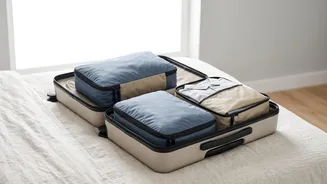







What Are Compression Cubes?
At first glance, compression cubes look like standard packing cubes—small, zippered fabric pouches used to organise items in your suitcase. However, they have a key difference: a second, outer zipper. You pack your clothes in the main compartment, zip it shut,
and then close the second compression zipper. This process squeezes the cube, forcing out excess air and making the entire package flatter and more compact. They are distinct from vacuum bags, which require a pump or rolling to remove air and often result in a hard, inflexible block. Compression cubes simply condense soft items, making them an efficient tool for maximising luggage space.
The Science of Saving Space, Not Weight
The primary function of a compression cube is to reduce volume, not weight. This is the most critical rule for travellers to understand. By squeezing bulky items like jumpers, jackets, and towels, the cubes eliminate the empty air pockets trapped between fabric fibres. This can reduce the space your clothes occupy by as much as 30%. While your bag will be easier to close and more likely to fit into a restrictive sizing frame at the airport, it will weigh exactly the same. The temptation is to use the extra space to pack more items, but this can quickly push your carry-on over the common 7 kg limit enforced by many Indian domestic carriers.
Conforming to Strict Carry-On Rules
Airlines in India are known for their stringent carry-on policies. Carriers like IndiGo, SpiceJet, and Akasa Air typically limit cabin bags to a total weight of 7 kg and dimensions around 55 x 35 x 25 cm. These measurements include wheels and handles, and enforcement at the gate can be strict, especially on full flights. Compression cubes are a strategic advantage here. By condensing your clothing, you can more easily fit everything into a compliant bag without a struggle. This is particularly useful for travellers trying to avoid checked baggage fees by sticking to a single carry-on, as the cubes ensure the bag's dimensions are not distorted by bulky contents.
The Pros and Cons to Consider
The main benefit of compression cubes is optimised luggage space and better organisation. Grouping items—tops in one, bottoms in another—makes finding what you need easier without unpacking your entire bag. However, there are downsides. The compression process can cause significant wrinkles, especially in fabrics like cotton and linen. They are better suited for knitwear, wool, and other wrinkle-resistant materials. Furthermore, because the compressed cubes are dense and rigid, they can be harder to arrange inside a suitcase than softer, regular packing cubes, which can conform to odd spaces.
How to Pack With Cubes Like a Pro
To get the most out of your compression cubes while minimising drawbacks, follow a few simple tips. First, roll your clothes tightly before placing them in the cube; this helps reduce sharp creases. For items like dress shirts, carefully folding them to the exact dimensions of the cube can also prevent wrinkles. Don't overfill a single cube, as this puts stress on the zippers and can actually create more wrinkles. Pack heavier cubes at the bottom of your suitcase near the wheels for better balance. Finally, and most importantly, weigh your bag after you've packed. A portable luggage scale can save you from a stressful repacking session at the airport.