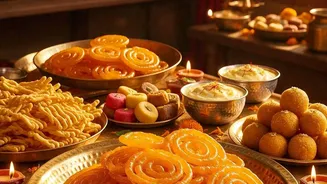




Bhai Dooj is a celebration of sibling love, and no festival is complete without a platter of delicious homemade sweets. This year, let's move beyond simply garnishing with dry fruits and make them the star of the show.
Create a Rich, Stuffed Centre
One of the most delightful ways to
incorporate dry fruits is to use them as a surprise filling. Imagine biting into a soft ladoo or a crispy gujiya and discovering a flavourful, nutty centre. To do this, finely chop a mix of almonds, cashews, and pistachios. Sauté them in a little ghee until fragrant, then mix with crumbled khoya or mawa, desiccated coconut, and a touch of cardamom powder. This rich mixture can be stuffed into traditional sweets like besan ladoos or Dry Fruit Gujiyas. For a no-cook option, blend soft dates and figs into a paste and mix with chopped nuts to create energy balls that are both healthy and festive.
Craft Elegant Dry Fruit Rolls
Dry fruit rolls are a mithai shop favourite that look impressive but are surprisingly straightforward to make at home. The Kaju Pista Roll and Anjeer Badam Roll are two classic examples where dry fruits form the very structure of the sweet. For a Kaju Pista Roll, you create two separate doughs: one from cashew powder and another from pistachio powder. The pistachio dough is shaped into a log and then carefully wrapped with a thinly rolled sheet of the cashew dough. For an Anjeer Roll, a soft dough made from soaked and blended figs (anjeer) is wrapped around a rich filling of almond paste and chopped nuts. Once rolled and chilled, these logs are sliced into beautiful, pinwheel-like pieces that showcase their nutty layers.
Build a Flavourful Layered Barfi
Layering is a fantastic technique to build a recipe around dry fruits. Instead of a single-flavoured barfi, you can create a multi-textured sweet. A dry fruit barfi, often made with a base of dates and figs, is a great starting point. Cook down a paste of dates and figs in ghee until it becomes a thick, pliable dough. For the second layer, create a coarse mixture of roasted almonds, walnuts, and pistachios. Press the date-fig mixture into a greased tray, top it with the crunchy nut layer, and press down firmly. You can also create a layered effect by alternating a nutty base with a milk-based layer like in a traditional badam barfi. After chilling, it can be cut into squares, revealing distinct, delicious layers.
Infuse Syrups and Milk Bases
Even for sweets that don't have a solid structure, dry fruits can be a foundational flavour. When making milk-based desserts like kheer or firni, you can go beyond just adding chopped nuts at the end. Create a paste by blending soaked almonds or cashews and add it to the milk as it simmers. This not only thickens the kheer naturally but also imparts a deep, nutty richness throughout the dessert. For syrup-based sweets like gulab jamun or shahi tukda, infuse the sugar syrup with saffron, crushed cardamom, and slivered almonds and pistachios. As the sweets soak in the syrup, they absorb these delicate flavours, making every bite aromatic and special.
Use Ground Nuts as a Healthy Base
For a more modern or health-conscious approach, use ground nuts as the primary ingredient, replacing some of the flour or sugar. Badam Barfi is a perfect example, where almond flour or paste is the main component, cooked with milk and a sweetener until it thickens. Similarly, many sugarfree sweets use a thick paste of dates as a binder and natural sweetener for a mix of coarsely ground nuts and seeds. This mixture can be pressed into a pan to set as a barfi or rolled into ladoos. This method not only highlights the flavour of the dry fruits but also results in a dessert that is rich in protein and healthy fats.