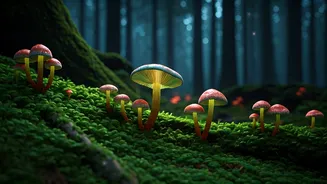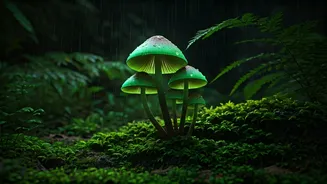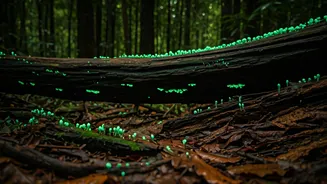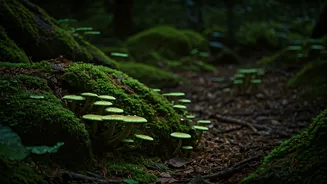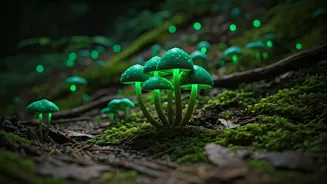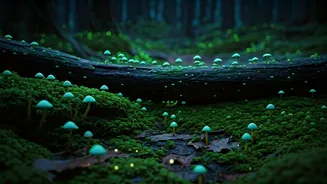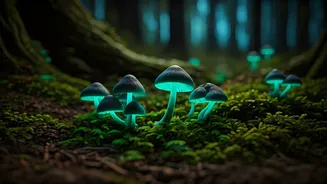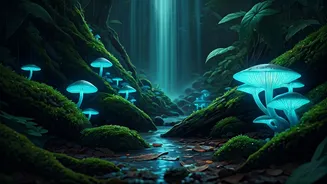


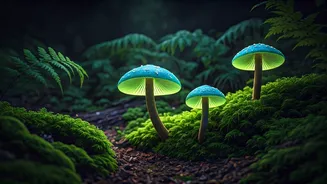
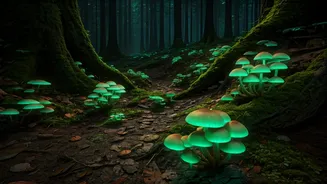
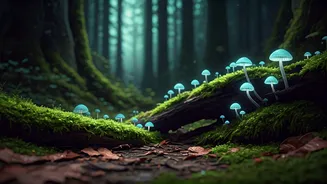


What Creates This Natural Light Show?
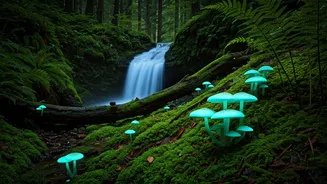
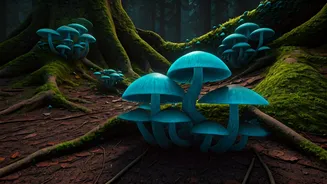
The soft, enchanting glow you see is a natural chemical process called bioluminescence. It’s the same phenomenon that makes fireflies light up. Inside these specific fungi, a compound called luciferin reacts with an enzyme, luciferase, and oxygen. This
chemical reaction releases energy in the form of cool, green light. Scientists believe this glow serves a crucial purpose: attracting nocturnal insects. As these insects crawl over the mushrooms, they pick up spores and carry them to new locations, helping the fungi reproduce and spread throughout the forest. It’s a brilliant survival strategy, disguised as a magical spectacle for us to enjoy.
Where to Find Glowing Forests in India
India is one of the few places in the world where you can reliably see this phenomenon, primarily during the monsoon. The Western Ghats are a major hotspot. Look for them in the dense forests of Maharashtra, particularly in the Bhimashankar Wildlife Sanctuary, and along the Chorla Ghat region that borders Goa, Karnataka, and Maharashtra. These areas, rich in decaying wood and high humidity, provide the perfect habitat for glowing species like *Mycena* and *Roridomyces*. Further east, the lush forests of Meghalaya, especially in the West Jaintia Hills district, are also known to come alive with these glowing mushrooms, creating an otherworldly landscape for trekkers and nature lovers.
The Best Time for a Magical Visit
Timing is everything when it comes to spotting these delicate fungi. The peak season aligns perfectly with the Indian monsoon, typically from June to late September or early October. The consistent rain and resulting high humidity create the ideal conditions for the fungi to fruit and activate their bioluminescence. The best time for a walk is on a moonless night, a few days after heavy rainfall. The darker the surroundings, the more vivid the glow appears. You’ll need to let your eyes adjust to the darkness for at least 10-15 minutes to fully appreciate the faint but beautiful light emanating from rotting logs, twigs, and leaf litter.
Tips for Your Night Walk
To make the most of this experience, a little preparation goes a long way. First and foremost, never venture into a forest at night alone. Go with a certified local guide or an experienced group who knows the terrain. Wear sturdy, waterproof trekking shoes with good grip, as the forest floor will be wet and slippery. Carry a torch or headlamp, but keep it switched off for most of the walk to allow your eyes (and your camera) to see the glow. Pack a light raincoat and insect repellent. Most importantly, be patient and quiet. This isn’t a dazzling light show but a subtle, serene phenomenon. Respect the fragile ecosystem by staying on marked trails and not touching or disturbing the fungi.
Capturing the Ethereal Glow
Photographing bioluminescence is challenging but rewarding. Your phone camera likely won’t be sufficient. You’ll need a DSLR or mirrorless camera with manual controls and a sturdy tripod to keep it steady during long exposures. Use a wide-angle lens with a large aperture (e.g., f/2.8 or lower) to let in as much light as possible. Set your camera to manual focus, as autofocus will struggle in the dark. You'll need to experiment with your settings, but a good starting point is a high ISO (around 1600-3200) and a long shutter speed (anywhere from 30 seconds to a few minutes). The key is to capture enough light without blowing out the delicate glow of the mushrooms.