




Start With Your 'Why'
Before you unroll a mat, take a moment to set an intention. Why are you drawn to yoga right now? Are you seeking stress relief, better flexibility, increased strength, or a moment of quiet in a busy day? Your 'why' doesn't need to be profound, but having
one will give your practice direction and motivation. This year's Yoga Day theme, 'Yoga for Self and Society,' reminds us that personal well-being can ripple outwards. By caring for yourself, you're better equipped to contribute positively to the world around you. Let this be your starting point—a small, personal goal that makes the practice yours.
Create a Simple Practice Nook
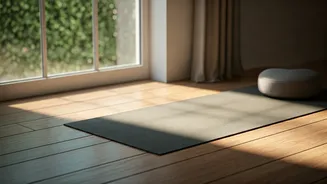
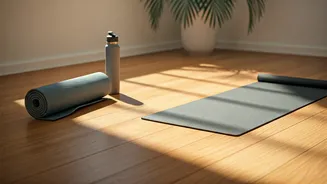
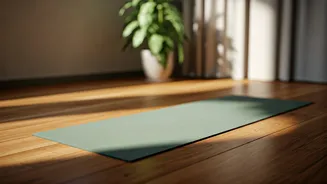
You don't need a fancy studio to begin. Find a quiet corner in your home where you have enough space to stretch your arms and legs. It should be a place where you feel calm and are unlikely to be disturbed for 15-20 minutes. All you truly need is a yoga mat or a non-slip rug. If you like, you can add elements that soothe your senses—perhaps a small plant, a candle, or soft, ambient music. The goal is to create a signal for your brain: when you step into this space, it’s time to switch off the external noise and focus inward.
Five Foundational Asanas
Consistency is more important than complexity. Focus on mastering a few foundational poses (asanas) to build a strong base. 1. **Tadasana (Mountain Pose):** Stand with your feet together, ground through your soles, and lengthen your spine. It seems simple, but it teaches correct posture and body awareness. 2. **Vrikshasana (Tree Pose):** A standing balance pose that improves focus and strengthens your legs and core. Place the sole of one foot on your inner thigh or calf (avoid the knee joint) and find a steady gazing point. 3. **Adho Mukha Svanasana (Downward-Facing Dog):** An all-body stretch that energises and rejuvenates. Form an inverted 'V' with your body, pressing your hands firmly into the mat and sending your hips up and back. 4. **Balasana (Child's Pose):** A gentle resting pose. Kneel on the floor, sit back on your heels, and fold forward, resting your forehead on the mat. It’s perfect for catching your breath. 5. **Shavasana (Corpse Pose):** Lie flat on your back and allow your body to completely relax. This pose is crucial for integrating the benefits of your practice.
Focus on Your Breath
In yoga, the breath (prana) is just as important as the physical postures. It anchors you in the present moment and helps calm the nervous system. Before you begin moving, sit comfortably and practice simple diaphragmatic breathing. Place one hand on your belly and the other on your chest. As you inhale through your nose, feel your belly expand. As you exhale, feel it gently contract. Try to link this conscious breathing to your movements. Inhale as you lengthen or expand (like lifting your arms in Tadasana), and exhale as you fold or contract (like moving into Balasana).
Listen to Your Body, Not Your Ego
This is the most important rule. Yoga is a non-competitive practice. Some days you will feel flexible and strong; other days you will feel tight and tired. Both are okay. Never force a pose. If you feel a sharp or pinching pain, gently back off. Use props like cushions or books to support you if needed. For example, if your heels don't reach the floor in Downward-Facing Dog, simply bend your knees. The goal is not to achieve a 'perfect' pose but to find what feels right and beneficial for your body on that particular day. Honouring your limits is the truest form of advanced practice.