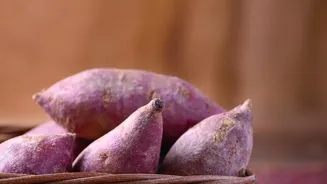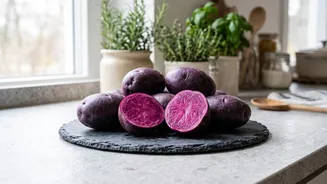




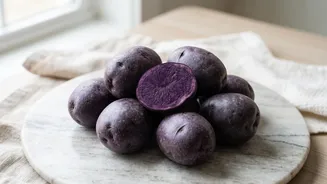


Meet the new star of the vegetable aisle: a potato that is purple through and through. Developed by Indian scientists, Kufri Jamunia is not just a novelty; it is a nutritional powerhouse designed to bring more than just colour to your plate.
What is Kufri Jamunia?
Kufri Jamunia
is a unique, biofortified potato variety developed by the ICAR–Central Potato Research Institute (CPRI) in Shimla. Officially released in 2024, it stands out with its dark purple skin and vibrant purple flesh, a trait that remains even after cooking. This is a significant improvement over earlier coloured varieties that often had colour only in the skin. Developed by crossing two different potato lines, the goal was to create a high-yielding, nutritious crop suited for Indian conditions. This new potato is recommended for cultivation across the North Indian plains, including states like Punjab, Haryana, Uttar Pradesh, and Bihar, where it has shown strong performance in trials.
The Science Behind the Colour
The brilliant purple hue of Kufri Jamunia comes from high levels of anthocyanins, the same natural pigments and powerful antioxidants found in blueberries, jamun, and blackberries. Antioxidants are compounds that help protect our bodies from damage caused by unstable molecules called free radicals. This damage, often called oxidative stress, is linked to ageing and various health issues. Kufri Jamunia contains a significant amount of these beneficial compounds, with about 42 mg of anthocyanins per 100 grams of flesh. This makes it a valuable addition to a diet rich in antioxidants, which are known to help reduce inflammation and support overall health.
A Nutritional Upgrade
Beyond its antioxidant content, Kufri Jamunia is a prime example of biofortification—the process of breeding crops to increase their nutritional value. It was developed specifically to help combat 'hidden hunger', a term for micronutrient deficiencies. Compared to conventional potatoes, it is a richer source of several key nutrients. A 100-gram serving delivers approximately 42.75 mg of Vitamin C, 3.22 mg of iron, and 2.28 mg of zinc. These figures are notably higher than those found in many common potato varieties, making Kufri Jamunia a more nutrient-dense choice for daily meals. It also has a lower glycemic index than many white potatoes, meaning it may cause a slower rise in blood sugar levels.
From the Farm to Your Kitchen
From an agricultural standpoint, Kufri Jamunia is a robust and productive crop. It is a medium_maturing variety, taking about 90_100 days to grow, and offers farmers an impressive yield of 32_35 tonnes per hectare. It also has good storage qualities, an important factor for both farmers and consumers. In the kitchen, Kufri Jamunia is surprisingly versatile. It has a mealy texture and a slightly earthy, nutty flavour. Unlike some colourful vegetables that lose their vibrancy when cooked, this potato holds its purple colour well, whether it is boiled, baked, roasted, or fried. This makes it perfect for creating visually striking and nutritious dishes like vibrant mashed potatoes, colourful salads, or crispy roasted potatoes. Researchers have even suggested its use in parathas, soups, and dehydrated flours.