


The 'Danger Zone' Explained
The fundamental rule of food safety revolves around avoiding the 'temperature danger zone'. This is the range between 40°F (4°C) and 140°F (60°C), where bacteria like Salmonella and E. coli can multiply rapidly. Leaving perishable food in this zone for
too long is one of the most common causes of foodborne illness. The goal is to keep hot food hot (above 140°F/60°C) and cold food cold (below 40°F/4°C). When it comes to leftovers, the aim is to get them cooled and into the fridge as quickly as possible to move them through the danger zone.
The Critical Two-Hour Rule
The most important guideline to remember is the two-hour rule. Cooked food should be refrigerated within two hours of being cooked. If the room temperature is high, such as above 90°F (32°C), this window shrinks to just one hour. Bacteria can double in number in as little as 20 minutes at room temperature. Sticking to this timeframe minimizes the period your food spends in the danger zone, drastically reducing the risk of harmful bacterial growth. Any perishable food left out for longer than two hours should be discarded.
How to Cool Food Fast
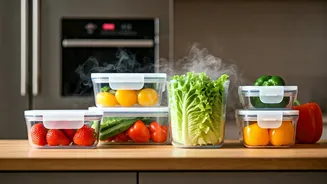
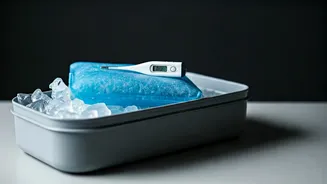
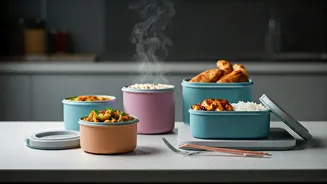
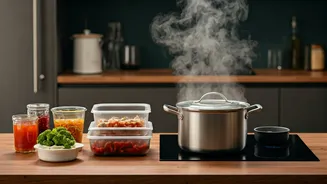
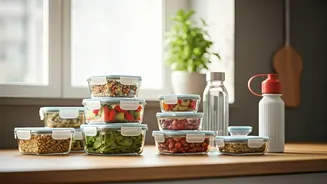
A large, deep pot of hot soup or stew will take a very long time to cool in the center, creating a perfect breeding ground for bacteria. To speed up the cooling process, you must increase the food's surface area. Divide large quantities into several smaller, shallow containers. A depth of three inches or less is ideal. You can also cut large items like roasts or whole poultry into smaller pieces. For liquids like soups and sauces, an 'ice bath' is highly effective. Place your smaller containers into a sink or larger bowl filled with ice and water to cool them rapidly before refrigeration. You can also use special 'ice paddles' that are frozen and used to stir the food.
Putting Hot Food in the Fridge
It's a persistent myth that you must wait for food to cool completely before refrigerating it. Modern refrigerators are powerful enough to handle the heat. In fact, you should put warm food in the fridge to get it cooling quickly. The key is to use the shallow containers mentioned earlier. This prevents the food from staying in the danger zone for too long and avoids significantly raising the overall temperature of your fridge, which could affect other foods. You can even leave the lids slightly ajar at first to allow steam to escape, then seal them fully once the food is cold.
Storing and Reheating Safely
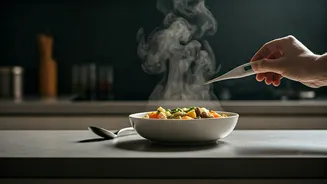
Once in the fridge, most leftovers are safe to eat for three to four days. When you're ready to eat them, reheating properly is the final step for safety. All leftovers should be reheated to an internal temperature of 165°F (74°C). This ensures any bacteria that may have been introduced are killed. Use a food thermometer to be certain. When using a microwave, cover the food and stir it midway through to ensure it heats evenly without cold spots. Sauces, soups, and gravies should be brought to a full, rolling boil. It's best practice not to reheat the same leftovers more than once.