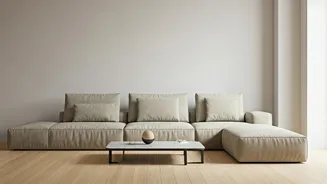









The Low-Down on Low-Level Living
In cities like Mumbai, Bengaluru, and Delhi, where square footage is a luxury, making a studio apartment feel open and inviting is a common challenge. The minimalist design trend offers a solution, but it’s evolving. Instead of just decluttering, designers
and savvy residents are looking down—literally. Low-level sitting furniture is becoming the hero of small-space makeovers. By keeping the main furniture pieces closer to the ground, you create more vertical space. This simple trick draws the eye upwards, making ceilings feel higher and the entire room appear larger and more airy. It’s a design illusion that has a powerful, tangible effect on how a space feels, transforming a cramped studio into a serene, open-plan sanctuary.
Build Your Foundation on the Floor
The easiest and most affordable way to adopt this trend is to start with the floor itself. Think of it as your new canvas. High-quality, comfortable floor seating is both incredibly versatile and budget-friendly. Invest in large, sturdy floor cushions in durable fabrics like jute or thick cotton. Look for modern interpretations of the traditional ‘gadda’, which can be stacked or laid out as needed. A collection of pouffes or ottomans can serve as extra seating for guests, footrests, or even makeshift side tables. This approach is not only practical but also taps into a long-standing Indian tradition of floor seating, giving this modern trend a comforting, familiar feel. It promotes a relaxed, informal atmosphere perfect for unwinding after a long day.
Finding the Right Sofa and Bed
While floor cushions are great, you’ll likely still want a primary piece of furniture for comfort. The key is to choose items with a low profile. Look for sofas that sit directly on the floor or have very short legs. Japanese-inspired futons or sleek, armless daybeds are excellent choices. They provide ample seating without visually dominating the room. For your sleeping area, consider a platform bed. These frames are low to the ground and often have a simple, minimalist design that complements the aesthetic. By keeping the largest pieces of furniture low, you maintain an unbroken visual line across the room, reinforcing the sense of openness and flow.
Low Tables, High Impact
Your seating isn’t the only thing that needs to get low. A towering coffee table will instantly disrupt the effect. Opt for a low-slung coffee table that’s no higher than the seat of your sofa or cushions. A simple wooden plank on short legs, a wide, flat drum table, or a set of nesting tables that can be tucked away are all great options. Don't be afraid to think outside the box; a vintage trunk can serve as a character-filled coffee table with the added bonus of hidden storage. For side tables, choose small, low stools or even a neat stack of coffee table books. The goal is to ensure every surface contributes to the low, horizontal aesthetic rather than fighting against it.
Bringing It All Together
A cohesive low-level look is about more than just the furniture. Anchor the entire space with a large, inviting rug. A good rug defines the seating area and adds a layer of texture and warmth, making floor seating even more appealing. When it comes to lighting, use a mix of sources. A tall, arched floor lamp can provide overhead light without requiring ceiling installation, and its height will contrast beautifully with the low furniture, further emphasizing the vertical space. Keep your walls and vertical spaces functional. Use tall, narrow bookshelves or floating shelves to draw the eye up and provide storage, keeping the floor area as clear and uncluttered as possible. This balance between low furnishings and high storage is the key to a successful minimalist studio.