





An Atmosphere of Challenge
The Martian atmosphere is a stark contrast to Earth's. It is incredibly thin and composed of about 96% carbon dioxide, with only a scant 0.16% oxygen. This composition makes it toxic to humans and useless for combustion. For decades, the logistics of a crewed
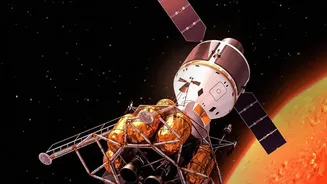
Mars mission have been nightmarish. Astronauts would need oxygen not only for life support but also as a critical component of rocket propellant to return home. Getting a crew of four off the Martian surface could require about 25 metric tons of liquid oxygen. Transporting that much oxygen from Earth would be astronomically expensive and logistically complex, requiring multiple heavy launches. This single problem has been one of the biggest barriers to planning a long-term human presence on the Red Planet. The solution, therefore, isn't to bring it with us, but to make it there. This concept is known as In-Situ Resource Utilization (ISRU), and it's the key to making Mars exploration sustainable.
Manufacturing Air From Thin Air
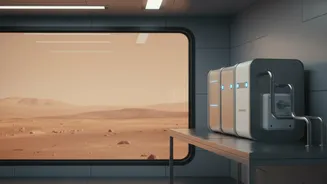
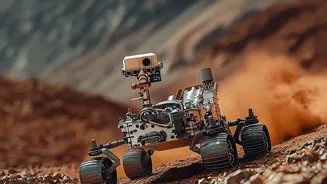
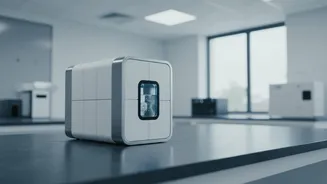
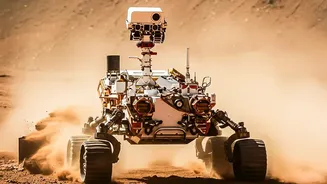
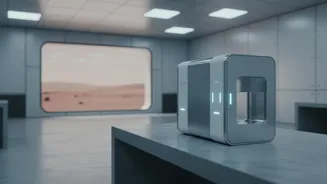
Enter the Mars Oxygen In-Situ Resource Utilization Experiment, or MOXIE. This microwave-sized device, which landed on Mars in 2021 aboard the Perseverance rover, was designed as a proof-of-concept. Its mission: to prove that it's possible to convert the carbon dioxide-rich Martian atmosphere into pure, breathable oxygen. MOXIE works through a process called solid oxide electrolysis. It essentially inhales Martian air, filters it, compresses it, and then heats it to an extreme 800 degrees Celsius. At this temperature, an electrochemical process splits the carbon dioxide molecules (CO2) into oxygen ions and carbon monoxide (CO). The oxygen ions are then combined to form breathable, molecular oxygen (O2), while the carbon monoxide is vented back into the atmosphere.
From Experiment to Viable System
Over its mission, which concluded in 2023, MOXIE proved to be a remarkable success. It ran 16 times under various Martian conditions—day and night, across different seasons—and consistently produced high-purity oxygen. In total, it generated 122 grams of oxygen, enough to keep a small dog alive for about 10 hours. At its peak, it produced 12 grams per hour, double what NASA originally hoped for. This success proved that the core technology is sound and can operate reliably in the harsh Martian environment. The headline's mention of "scaled" systems refers to the crucial next step. MOXIE was just a small-scale prototype, about 0.5% of the size needed for a human mission. The next generation won't be another small experiment, but a full-scale system designed to produce kilograms of oxygen per hour, not just grams. This scaled-up system, sometimes called "Big MOXIE," would be a powerful oxygen generator combined with equipment to liquefy and store the product for future use by astronauts.
The Blueprint for Martian Living
A full-scale oxygen plant on Mars would be a true game-changer. Researchers envision sending a much larger version of MOXIE ahead of a human mission. This system would work continuously, like a small forest of several hundred trees, to fill up massive oxygen tanks over months or even years. By the time astronauts arrive, they would have a ready supply of breathable air and the oxidizer needed to fuel their Mars Ascent Vehicle for the journey home. This approach dramatically reduces mission risk and cost by eliminating the need to haul tons of oxygen across millions of miles of space. The challenges of scaling up are significant, however. A human-scale system would need to produce two to three kilograms of oxygen per hour and require about 25 to 30 kilowatts of continuous power, orders of magnitude more than the small MOXIE prototype. Engineers are now using the data from MOXIE to design these larger, more robust systems, tackling challenges like thermal management and long-term durability. This technology is the foundational step toward allowing astronauts to truly "live off the land" on another planet.