
From Frozen Rivers to Unstable Lakes
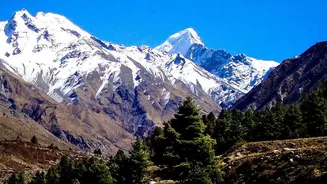
For centuries, Himalayan glaciers have been vast, frozen reservoirs, feeding Asia's most vital rivers. But as global temperatures rise, this landscape is changing at an alarming rate. Research shows that Himalayan glaciers are melting at a rate ten times
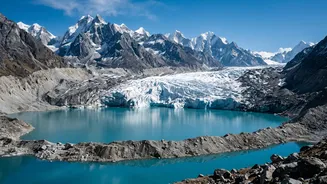
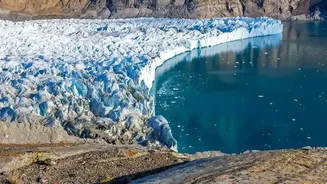
faster than in previous centuries. A 2026 report from the International Centre for Integrated Mountain Development (ICIMOD) found that ice loss rates have doubled since the year 2000 alone. As these glaciers retreat, the meltwater pools in the depressions left behind, creating thousands of new or expanded glacial lakes. These are not serene mountain tarns; many are unstable, unpredictable, and dangerously contained.
The Anatomy of a GLOF
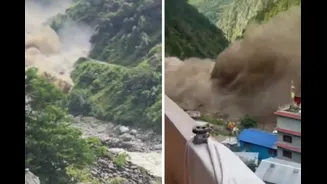
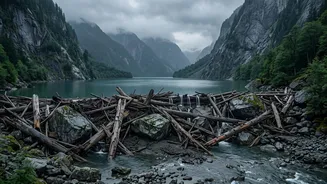
The greatest danger comes from what scientists call a Glacial Lake Outburst Flood, or GLOF. These lakes are often dammed by moraines—loose, unstable walls of rock, soil, and ice left behind by a retreating glacier. Unlike solid bedrock, these natural dams can fail suddenly. A large chunk of falling ice, a landslide, heavy rainfall, or even just the immense pressure of the growing body of water can trigger a breach. When the moraine dam collapses, it releases an enormous, instantaneous torrent of water, mud, and boulders. This wall of debris moves with incredible force, destroying everything in its path, including villages, roads, and crucial infrastructure like hydropower plants. The recent disaster in Nepal on August 26, 2026, was initially thought to be caused by an earthquake, but was later determined to be a glacier collapse that triggered a debris flow and flood.
A Himalayan-Sized Problem
The Hindu Kush Himalaya region is warming significantly faster than the global average, making it a hotspot for GLOF risks. Scientists have identified hundreds of potentially dangerous glacial lakes across the region, with some inventories counting around 200 that are considered a direct threat. The number of GLOF events per decade is now nearly five times higher than it was before 1950. The scale of this threat is immense, with research suggesting that up to two billion people who depend on the water from these mountains could be affected by changes in the cryosphere. Adding to the danger, many of the riskiest lakes are small and difficult to monitor, yet still capable of causing immense destruction downstream, as several recent events have proven.
A Shared Threat for India and its Neighbours
While the latest tragedy unfolded in Nepal, the threat is not confined by borders. Many of the most dangerous glacial lakes are located in transboundary regions, meaning a GLOF originating in China or Nepal can have devastating consequences for communities in India. A 2020 inventory found that of 47 dangerous lakes threatening Nepal, 25 are in Tibet. Indian states like Sikkim, Uttarakhand, Himachal Pradesh, and Arunachal Pradesh face identical risks from glaciers within their own territories. The 2021 Rishi Ganga flood in Uttarakhand and the 2023 Sikkim flood that washed away the Teesta III dam were grim reminders of India's vulnerability. These events destroyed hydropower projects and led to significant loss of life, highlighting how critical infrastructure is often built directly in the path of these potential disasters.
Racing Against the Melt
Addressing the GLOF threat is a monumental challenge that requires urgent, cross-border cooperation. Efforts are underway to improve monitoring and create early warning systems, but progress is slow. Of the thousands of lakes, very few are adequately monitored with modern technology. Solutions range from technically demanding structural interventions, like controlled draining of lake water, to improving coordination between countries like India, Nepal, and China for sharing advance warnings. Community-based flood warning systems are also being piloted to help downstream villages get alerts faster. However, as glaciers continue to melt at an accelerating pace, these disasters are no longer unforeseen surprises but an unfolding reality of a warming climate.