







The Myth: Bigger Weights Equal Bigger Muscles
Walk into almost any weight room, and you'll see the principle in action: low reps, heavy plates, and a whole lot of grunting. This approach is built on a sound scientific concept called mechanical tension—the force generated in your muscles to overcome
a heavy load. It’s long been considered the primary driver of hypertrophy (muscle growth). The logic feels intuitive: to get bigger, you must lift bigger. This has led to a fitness culture that often glorifies the one-rep max and dismisses anything in the double-digit rep range as being for 'toning' or cardio, not serious muscle building. But this black-and-white view ignores a huge part of the physiological picture.
The Reality: Lighter Weights Can Be Just as Effective
Recent research has turned this old dogma on its head. A growing body of evidence shows that you can build just as much muscle with lighter weights as you can with heavy ones. The catch? You have to take your sets to, or very near to, muscular failure. This is the point where you can’t complete another repetition with proper form. Why does this work? Because it generates a different, but equally potent, stimulus for growth: metabolic stress. When you perform higher-rep sets (think 15-30 reps), your muscles are under tension for a longer period. This creates a metabolic cascade, a buildup of byproducts like lactate, and a cellular swelling (the 'pump') that signals your muscles to adapt and grow. The key isn't the weight itself, but the level of effort and the signal it sends.
More Than Muscle: The Case for Joint Health and Consistency
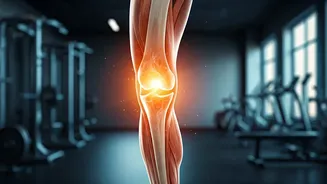
The argument for incorporating lighter weights goes far beyond just muscle size. For one, it’s significantly kinder to your joints. Constantly grinding out heavy singles and doubles puts immense strain on your connective tissues, increasing the risk of injury over time. Lighter-weight training allows you to perfect your form and build a mind-muscle connection without the same level of orthopedic stress. This makes it a more sustainable, and safer, long-term strategy. It's also more accessible. If you're new to lifting, recovering from an injury, or have limited access to a spotter, high-rep training is a fantastic way to make progress safely. Consistency is the true king of fitness, and a method that keeps you healthy and in the game is inherently superior to one that constantly sidelines you.
How to Put It Into Practice
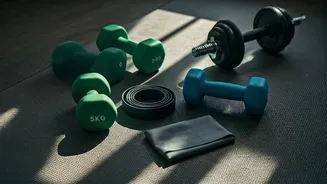
So, how do you 'ditch' heavy weights effectively? It’s not about swinging around tiny pink dumbbells for a hundred reps. The goal is to choose a weight that challenges you in the 15-to-30-rep range. The last few reps of any set should be a serious struggle—that’s where the magic happens. Focus on slowing down the movement, especially the lowering (eccentric) portion of the lift, to maximize time under tension. A good rule of thumb is a '2-1-3' tempo: two seconds to lift, a one-second squeeze at the top, and a controlled three seconds to lower the weight. You can dedicate entire workouts to this style, or you can integrate it by making the last set of an exercise a high-rep 'burnout' set. The point is to use it as another powerful tool in your fitness toolbox, not a replacement for all other forms of training.