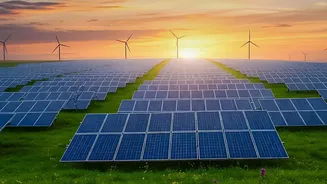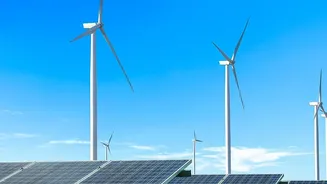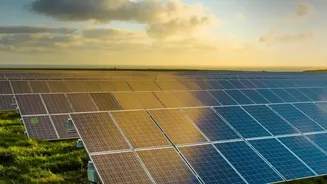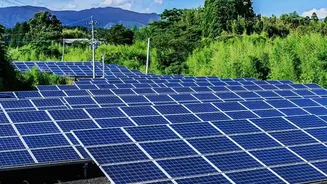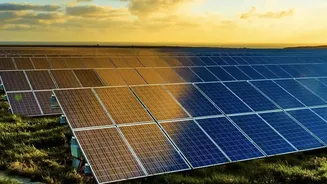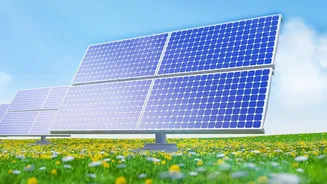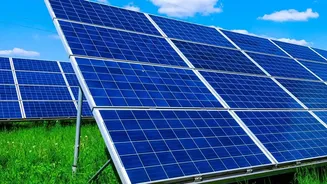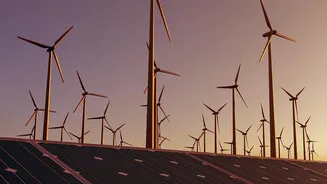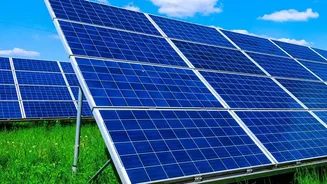






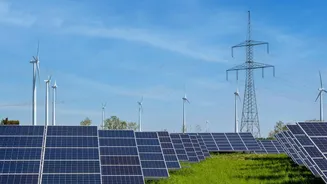
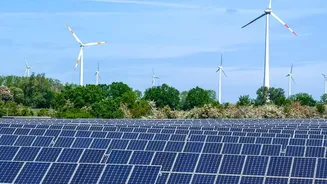
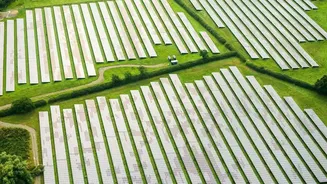
Imagine your farm producing both crops and clean energy. That is the promise of agrivoltaics, a system where solar panels and agriculture coexist on the same land. For India, it’s a powerful idea, but what do farmers need to make it a reality?
Understanding the Dual-Use Model
Agrivoltaics,
or AgriPV, is the practice of using land for both agriculture and solar power generation simultaneously. Instead of covering fields entirely, solar panels are installed on elevated structures, typically several meters high, allowing crops to be cultivated underneath or between the panel rows. This innovative approach addresses two of India’s critical needs: food security and clean energy. The panels can provide shade, which helps reduce water evaporation from the soil by up to 30%, protect crops from extreme heat and hail, and create a more stable microclimate. In some cases, this has led to improved yields for certain shade-tolerant crops.
The Financial Hurdle: High Initial Costs
The single biggest barrier for most farmers is the significant upfront investment. Agrivoltaic systems can cost 25-30% more than conventional ground-mounted solar projects because the elevated structures require more robust and expensive materials. For a small or marginal farmer, who make up over 85% of India's farming population, this cost is often prohibitive without substantial support. The cost to generate a unit of electricity is also higher, estimated at around ₹3.20, compared to ₹2.60 for traditional solar farms.
Government Support and Policy
Recognising the financial strain, the Indian government has introduced schemes to ease the burden. The Pradhan Mantri Kisan Urja Suraksha evam Utthaan Mahabhiyan (PM-KUSUM) is a key initiative. Under its various components, farmers can receive subsidies of up to 60% and access loans for the remaining cost to install solar pumps or grid-connected power plants. For many, this reduces the upfront cost to just 10% of the total. Furthermore, the government is actively developing a dedicated policy framework for agrivoltaics to streamline regulations and encourage adoption, with an initial target of 5 GW.
Choosing the Right Crops and Design
Success in agrivoltaics isn't just about installing panels; it's about smart integration with farming. Not all crops are suitable for growing in partial shade. Research from institutions like the Central Arid Zone Research Institute (CAZRI) shows that shade-tolerant, high_value crops are often the best fit. These include many leafy greens, herbs, spices like turmeric and ginger, and certain vegetables like tomatoes and brinjal. Taller crops like sugarcane or those needing intense direct sunlight, such as paddy, are generally poor fits. The design of the solar array itself—including panel height, spacing, and orientation—is crucial to ensure enough light reaches the crops and that farm machinery like tractors can operate freely underneath.
Navigating Technical and Legal Needs
Beyond financing and crop selection, farmers need technical expertise. This includes understanding grid connectivity, maintenance requirements, and navigating the legal landscape. A major concern is land reclassification; in some states, generating power is considered an industrial activity, which could risk a farmer's agricultural status and associated benefits like subsidies. Farmers also need clear agreements for selling surplus power to local distribution companies (DISCOMs). Access to reliable technical partners for installation and ongoing maintenance, such as panel cleaning, which can be difficult on elevated structures, is another critical need.