




Join the Young Scientist Programme (YUVIKA)
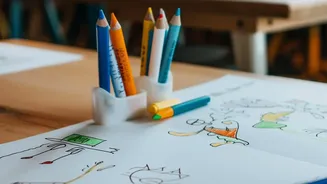
One of ISRO's flagship initiatives is the 'YUva VIgyani KAryakram' (YUVIKA), or Young Scientist Programme. This is a two-week residential program designed specifically for school students who have completed Class 9. The goal is to 'catch them young' by
providing basic knowledge on space technology, space science, and its applications. Students get to visit ISRO's centres, interact with eminent scientists, participate in hands-on activities like building model rockets, and attend lectures. The selection process considers academic performance, especially in science and maths, and participation in science fairs or Olympiads. With thousands of students registering each year, it's a competitive but incredible opportunity to get an early glimpse into the world of space research.
Participate in Student Satellite Programmes
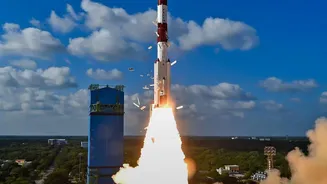
For university and college students, ISRO offers a chance to get directly involved in space missions through its Student Satellite Programme. This initiative encourages students from academic institutions to design, develop, fabricate, and test their own small satellites. ISRO provides crucial mentorship, technical support, and even launch services for these student-built satellites. It’s a highly practical, hands-on learning experience that bridges the gap between academic theory and real-world space engineering. This programme not only builds technical skills but also helps develop a future workforce and vendor base for India's space sector. Several student satellites have already been successfully launched, proving this to be a viable path for institutions to contribute to space technology.
Explore Internships and Project Work
ISRO provides opportunities for undergraduate and postgraduate students in engineering, technology, and science to undertake project work and internships at its various centres. These opportunities allow students to work on projects relevant to ISRO's ongoing programmes in unclassified areas. The duration and eligibility vary; for instance, B.E./B.Tech students can often apply after their sixth semester, while M.E./M.Tech students might be eligible after their first. These roles cover a wide range of fields, including electronics, mechanical engineering, remote sensing, and astrophysics. Interested students should check the websites of individual ISRO centres like VSSC, URSC, and SAC for specific announcements and application procedures.
Utilise ISRO's E-Learning Platforms
In the digital age, learning about space is more accessible than ever. The Indian Institute of Remote Sensing (IIRS) a unit of ISRO, offers a variety of free online courses through its outreach programme. These courses cover topics like remote sensing, geographic information systems (GIS), and their applications in various fields like agriculture and disaster management. The courses are delivered through live, interactive sessions or as self-paced e-learning modules. Upon successful completion, participants can even earn a certificate from ISRO. This is an excellent way for students and professionals alike to gain valuable knowledge in geospatial technologies directly from the experts.
Visit Space Museums and Exhibitions
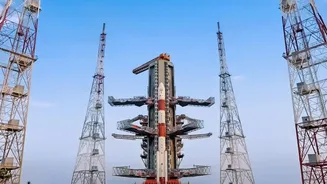
For a more informal but equally inspiring experience, students can visit the various space museums and exhibitions run by ISRO centres across the country. Locations like the Vikram Sarabhai Space Centre (VSSC) in Thiruvananthapuram and the Vikram Sarabhai Space Exhibition (VSSE) in Ahmedabad have dedicated spaces showcasing India's space journey. These exhibitions feature detailed models of rockets like the PSLV, satellites, and interactive displays explaining complex concepts. ISRO also runs a mobile exhibition called 'Space on Wheels', which travels to different cities and remote areas to bring the excitement of space exploration to a wider audience. During events like World Space Week (October 4-10), many centres also host special outreach activities, competitions, and talks.