


What is a Reusable Launch Vehicle?
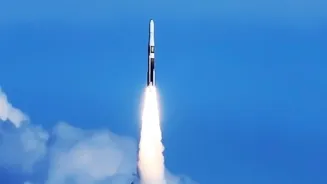
Think of it like an airplane. Instead of building a new one for every single flight, you refuel and reuse the same plane. Traditional rockets are expendable; they are used only once and their expensive components either burn up in the atmosphere or fall
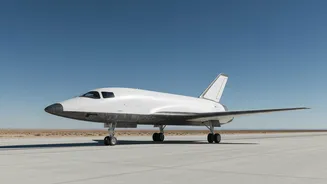
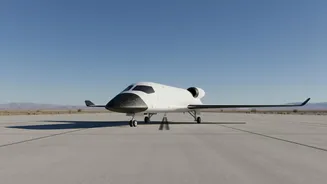
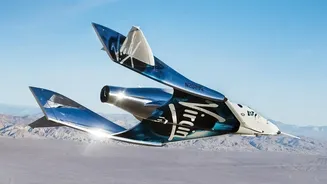
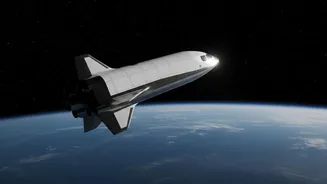
into the ocean. A Reusable Launch Vehicle (RLV), on the other hand, has parts designed to return to Earth intact, be refurbished, and fly again. This vehicle, nicknamed 'Pushpak', is ISRO's answer to this complex technological challenge. The primary goal is to drastically cut down the cost of launching satellites by reusing the most expensive parts of the rocket.
The Details of the Latest Test
The recent test was the third in a series of crucial Landing Experiments (LEX). In the demonstration, the winged 'Pushpak' vehicle was carried to an altitude of 4.5 kilometres by an Indian Air Force Chinook helicopter and then released. From there, it was on its own. The vehicle had to autonomously navigate its way to a runway at the Aeronautical Test Range in Chitradurga, Karnataka. It executed complex manoeuvres, corrected its course against wind conditions, and performed a perfect, high-speed horizontal landing on the airstrip, much like an aircraft. The landing speed exceeded 320 kmph, after which a brake parachute was used to slow it down. This successful test proves ISRO's mastery over the critical autonomous landing phase, which is essential for a vehicle returning from space.
The 'How' of Cheaper Launches
The cost of accessing space has always been a major barrier. A significant portion of a rocket's cost comes from the complex engines and structural components that are discarded after every mission. By recovering and reusing these elements, ISRO aims to slash launch costs by up to 80 percent. ISRO Chairman S. Somanath has spoken about the goal of bringing the cost of launching a kilogram of payload down from the current $10,000-$15,000 range to as low as $1,000 in the future. This isn't just about saving money; it's about making space more accessible for a wider range of applications, from communication and Earth observation satellites to scientific research and commercial ventures.
India's Place in the Global Space Race
The development of reusable launch technology places India and ISRO in an elite club. Companies like SpaceX with its Falcon 9 rocket have already demonstrated the immense economic and strategic advantages of reusability. With 'Pushpak', India is developing its own indigenous capability, ensuring self-reliance in this critical domain. This will not only serve India's own national needs but also make ISRO a more competitive player in the global commercial launch market, which is currently worth billions of dollars. Being able to offer reliable and low-cost launch services is key to securing a larger share of this market.
The Road Ahead for 'Pushpak'
While the successful landing experiments are a massive leap forward, the journey is not over. The RLV-LEX tests are part of the Reusable Launch Vehicle Technology Demonstrator (RLV-TD) programme. Having mastered the landing, the next major step will be the Orbital Re-entry Vehicle (ORV) experiment. This will involve launching the vehicle into orbit and having it return through the Earth's atmosphere to perform an autonomous landing. This is a far more complex challenge, involving withstanding the extreme heat and pressures of re-entry. Success in these future tests will bring India one step closer to having a fully operational two-stage-to-orbit (TSTO) reusable launch vehicle, cementing its position as a major space power.