




A New Measuring Stick for Climate
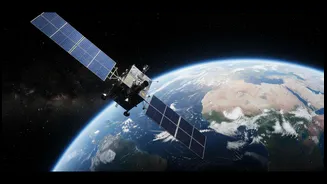
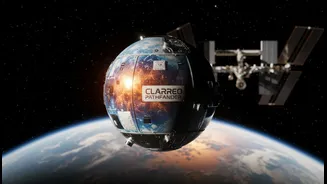
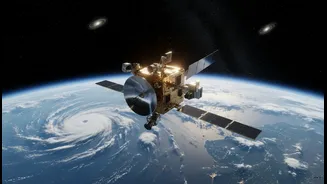
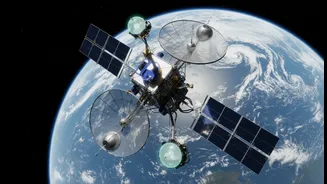
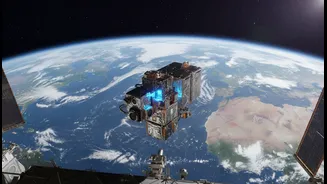
Orbiting Earth aboard the International Space Station (ISS), NASA’s CLARREO Pathfinder (CPF) is not just another satellite. Launched in May 2026, it is a highly specialized spectrometer designed to solve one of the biggest challenges in climate science:
accuracy. To confidently detect the subtle, long-term trends of a changing climate, scientists need data that is not only consistent but also incredibly precise. Many existing sensors, often designed for weather forecasting, lack the rigorous on-orbit calibration needed to track climate change over decades without ambiguity. CPF was engineered to be different. Its primary purpose is to act as a 'metrology laboratory in orbit'—a definitive reference point against which other sensors can be compared. It measures sunlight reflected from Earth with an unprecedented accuracy, aiming to be five to ten times more precise than current instruments. By doing so, it provides a benchmark that is traceable to universal scientific standards, much like a standard kilogram sets the basis for all other mass measurements.
The Evidence: Calibrating the Climate Record
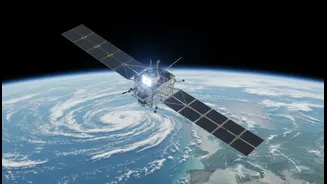
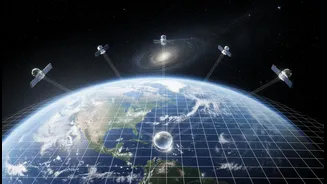
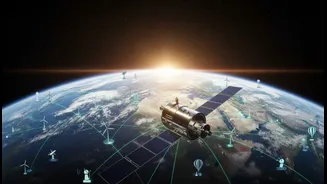
The key evidence CPF provides comes from its unique ability to self-calibrate in space. Most satellite instruments degrade over time due to the harsh environment, which can introduce uncertainty into their measurements. CPF mitigates this by regularly pointing its sensors at stable, well-known targets—primarily the Sun, but also the Moon—to check and maintain its accuracy. This process ensures the data it collects on Earth's reflected energy remains exceptionally reliable throughout its mission. Its main job is to demonstrate this on-orbit calibration and to transfer that accuracy to other critical climate-monitoring satellites, such as the CERES and VIIRS instruments. By flying under these satellites and taking simultaneous measurements of the same location, CPF allows scientists to precisely correct and calibrate the data from the entire fleet, effectively making the whole global observing system more accurate. This cross-calibration is a game-changer, strengthening the integrity of our global climate data records.
The Opportunity: Faster Insights and Better Policies
The opportunity created by this new level of accuracy is immense. With more trustworthy data, scientists can detect climate trends decades sooner than would otherwise be possible. This accelerated timeline is crucial for policymakers. A clearer and more immediate understanding of Earth's energy balance—how much solar energy the planet absorbs versus how much it reflects—allows for more informed and timely decisions regarding climate change mitigation and adaptation strategies. For example, better data on how clouds, aerosols, and snow cover affect Earth’s reflectivity can refine the climate models used to predict future warming, rising sea levels, and the frequency of extreme weather events. Ultimately, by reducing the uncertainty in our observations, CPF strengthens confidence in climate science itself, providing a more solid foundation for public and governmental action.
The Limits: A Pathfinder, Not the Destination
Despite its groundbreaking capabilities, it is essential to understand the mission's limits, which are embedded in its name: 'Pathfinder.' CPF is not the full, originally envisioned CLARREO mission, which was planned as a constellation of satellites. Instead, it is a demonstration mission launched to prove the technology and techniques are viable. Its one-year operational mission, followed by a year of data analysis, provides a vital but limited snapshot. While it can calibrate other sensors it crosses paths with from its orbit on the ISS, it cannot provide global coverage on its own. Furthermore, its accuracy goal, while revolutionary, is a slightly relaxed version of what was proposed for the full mission. Therefore, while CPF marks a significant leap forward in creating a new standard for climate observation, its primary role is to reduce the risk and pave the way for future, more comprehensive missions that can build on its success. It is a crucial step, but just one step on the long road to a fully calibrated Earth observation system.