

Why August is a Great Month for Saturn
This August, Saturn is perfectly positioned for evening viewing. The planet is heading towards its annual opposition in early October. Opposition is when Earth passes directly between the Sun and an outer planet. During this period, the planet appears
at its largest and brightest in our sky. Throughout August, Saturn will rise in the east around sunset and remain visible for most of the night, shining brightly against the backdrop of stars. It will be located in the constellation Pisces, which doesn't have many bright stars, making the steady, yellowish glow of Saturn stand out even more.
A Step-by-Step Guide to Finding Saturn
You don't need to be an expert to find Saturn. Just after sunset, find a spot with a clear view of the eastern horizon. As twilight deepens, look for a bright, star-like object that isn't twinkling. Planets shine with a steadier light than distant stars. Saturn will appear as a bright, yellowish point of light. As the night progresses, it will track across the southern sky, setting in the west before sunrise. Stargazing apps on your smartphone can also be an invaluable tool; simply point your phone at the sky, and the app will identify Saturn and other celestial objects for you.
Naked Eye, Binoculars, or Telescope?
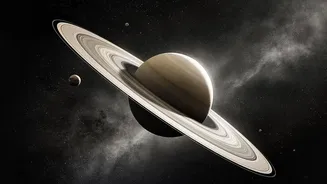
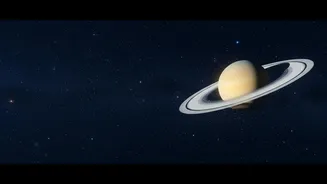
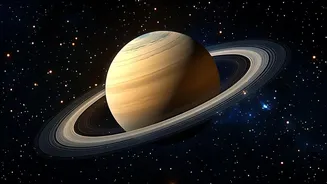
The beauty of this event is its accessibility. To the naked eye, Saturn is impressive, appearing brighter than most stars. It will look like a steady, non-twinkling, pale-yellow 'star'. If you have a pair of binoculars, you can get a better sense of its shape. While you won't see the rings distinctly, the planet may appear slightly elongated rather than a simple point of light. However, the real magic happens with a small telescope. Even a basic telescope at low magnification can reveal Saturn's most famous feature: its magnificent ring system. You might even glimpse its largest moon, Titan, which appears as a tiny star-like dot close to the planet.
Tips for the Best Viewing Experience
To make the most of your Saturn-gazing, try to get away from bright city lights. Light pollution can wash out fainter stars and make the sky less clear. A park, a terrace, or a location in the countryside will offer a much better view. Give your eyes time to adjust to the darkness—it usually takes about 20 minutes for your pupils to fully dilate, allowing you to see more celestial details. Also, check the weather forecast for a clear, cloudless night. Patience is key; spend some time just looking up and enjoying the vastness of the cosmos. It's a wonderful opportunity to connect with the universe from your own backyard.
What You're Looking At: The Lord of the Rings
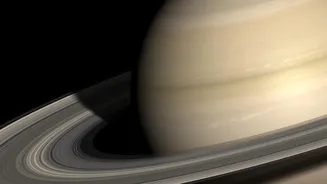
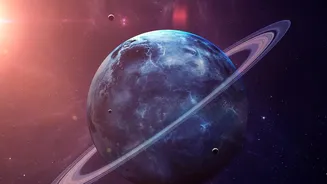
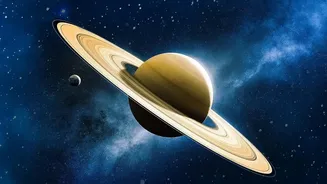
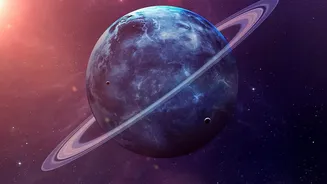
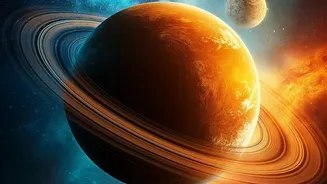
When you spot Saturn, you are looking at the sixth planet from the Sun, a gas giant so large that more than 760 Earths could fit inside it. It is about 1.2 billion kilometres away from Earth during its 2026 opposition period. The famous rings, which make Saturn one of the most beautiful objects in the solar system, are not solid. They are made of billions of icy particles, ranging in size from tiny dust grains to chunks as large as a house. Observing Saturn is more than just spotting a point of light; it's a chance to witness a colossal and majestic world that has fascinated humanity for centuries.