


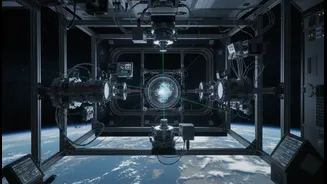


The Coolest Experiment in Space
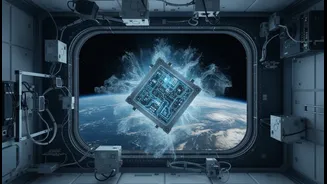
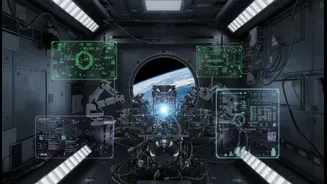
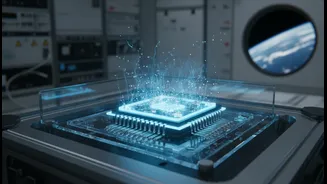
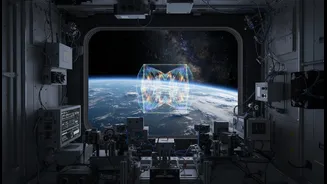
Orbiting 400 kilometres above Earth is NASA's Cold Atom Laboratory (CAL), a quantum science facility that has been operating on the International Space Station (ISS) since 2018. Its mission is to chill atoms down to temperatures just a fraction of a degree
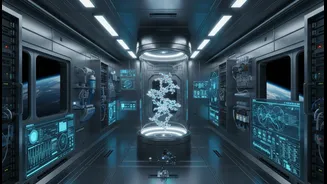
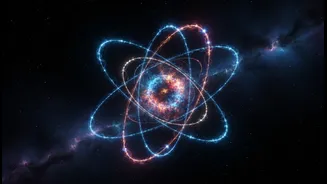
above absolute zero, or -273.15 degrees Celsius. At these extreme temperatures—colder than anywhere else in the known universe—atoms behave in profoundly strange ways. They can form a fifth state of matter, called a Bose-Einstein Condensate (BEC), where individual atoms act in unison as a single, macroscopic quantum wave. Studying these BECs on Earth is challenging; gravity causes the delicate atom clouds to collapse in fractions of a second. In the continuous free-fall environment of the ISS, scientists can observe these condensates for much longer, from several seconds to potentially even longer, unlocking new insights into the quantum world.
A Quantum Leap in Capabilities
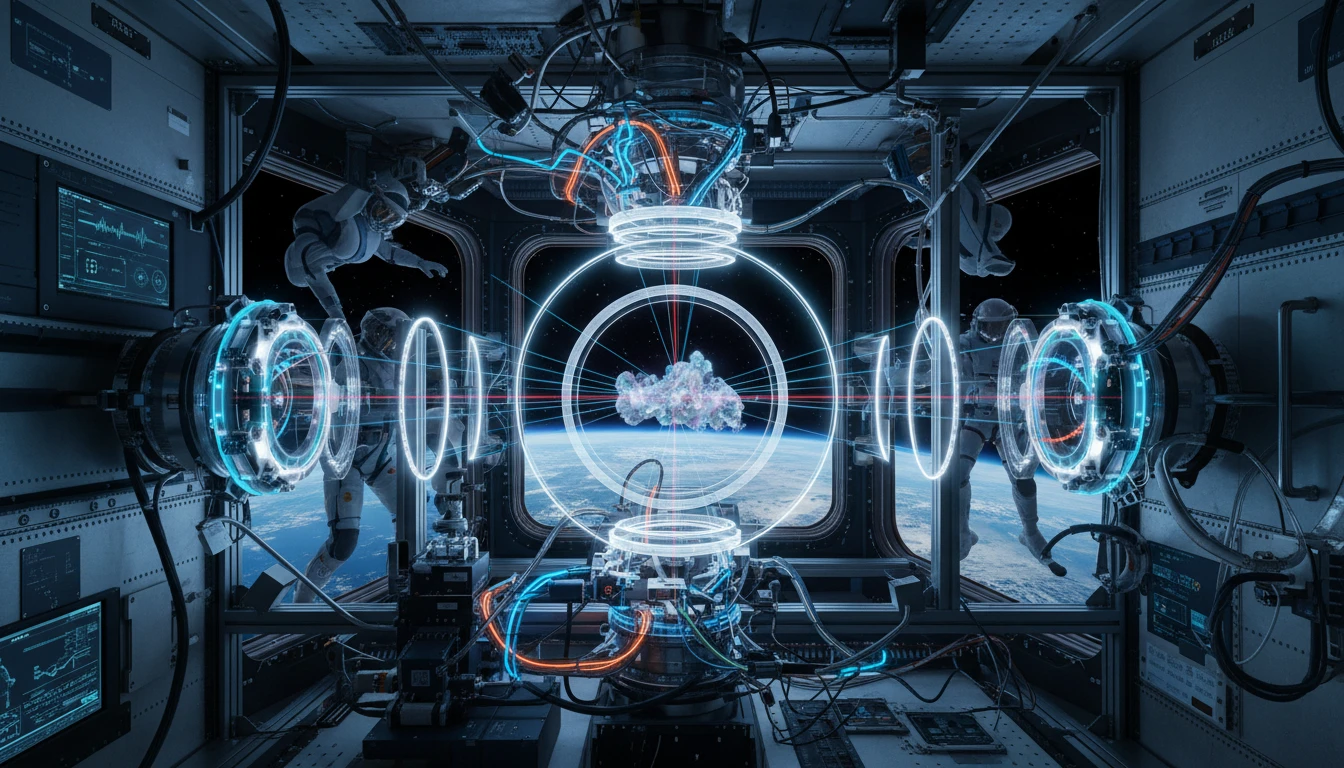
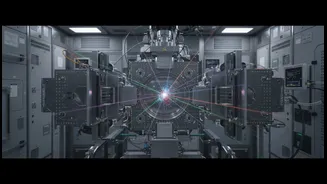
The recent upgrade, the fourth major enhancement since the lab's installation, has significantly boosted its capabilities. The new hardware, which arrived at the ISS in April 2026 and was subsequently installed by astronauts, includes a redesigned magnetic trap and improved atom sources. The magnetic trap is the invisible 'bowl' that contains the ultracold atom clouds. The new design allows scientists to alter the shape of the quantum gas, stretching and squeezing it to probe its properties in novel ways. Additionally, new hardware modules expand the facility’s ability to experiment with different types of atoms, like rubidium and potassium, and create larger and more complex quantum states for study. These enhancements, operated remotely from NASA's Jet Propulsion Laboratory, are already producing state-of-the-art measurements and expanding the range of possible experiments.
Probing the Universe's Deepest Questions
This focus on fundamental physics is not just an academic exercise. The experiments conducted in the Cold Atom Lab are designed to tackle some of the biggest unsolved mysteries in science. By observing how these ultracold atoms interact—or interfere—with each other, scientists can perform incredibly precise measurements. This technique, known as atom interferometry, could help in the search for dark matter and dark energy, the mysterious substances thought to make up most of the universe. Researchers also aim to use the facility to test Einstein's theory of general relativity with unprecedented accuracy. The microgravity environment allows for the creation of unique quantum states and even atom 'bubbles' that can't be formed on Earth, providing a pristine laboratory to witness the underlying rules of reality at their most fundamental level.
Beyond Basic Science: Future Applications
While the immediate goals are discovery-oriented, the knowledge gained from the Cold Atom Lab has significant long-term potential for practical applications. The extreme sensitivity of ultracold atoms to their surroundings makes them ideal for next-generation sensors. This could lead to vastly improved navigation systems for deep-space exploration, allowing spacecraft to chart their own course without relying on constant communication with Earth. On our own planet, this research could power a future quantum economy, with spin-offs in quantum computing, ultra-secure communication networks, and medical imaging. By pushing the limits of what's possible in the realm of quantum physics, NASA is not only expanding our cosmic horizons but also laying the groundwork for technologies that could transform our daily lives in the decades to come.