








The Evolution from Finisher to Architect
For years, Harry Kane's job for England was simple: score goals. He was the spearhead, the penalty box predator, the man you counted on to apply the final touch. But under Thomas Tuchel's management, Kane's role has undergone a profound evolution. He is
no longer just the finisher; he is the architect. This World Cup has showcased a Kane who drops deep into midfield, not out of desperation, but by design. This shift from a traditional number nine to a hybrid playmaker-striker has been years in the making, but has reached its peak on the world's biggest stage. Instead of waiting on the last defender, Kane now frequently receives the ball in central midfield, turning to spray passes to the wings or thread killer balls through defensive lines, a role that has been crucial to England's journey to the semi-finals.
A Tactical Nightmare for Defences
Kane’s new position creates a tactical nightmare for opposing teams. When he drops deep, he forces a centre-back to make a choice: follow him and leave a huge gap in the defensive line, or let him have the time and space to dictate play. As FIFA Technical Study Group expert Paulo Wanchope noted early in the tournament, this movement creates numerical superiority for England in the middle of the park. It is a calculated gamble by Tuchel, built around the knowledge that few players in world football possess Kane’s combination of physical presence, passing range, and goal-scoring instinct. This 'false nine' role is not just about creating for others; by arriving late in the box after starting a move, Kane makes his own runs even harder to track.
Unlocking Bellingham and the Wingers
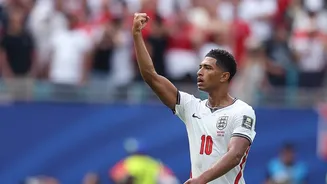
The biggest beneficiaries of Kane's selflessness have been England's dynamic attacking midfielders and wingers. Jude Bellingham, in particular, has thrived, often rotating with Kane and making surging runs into the space the captain vacates. Their partnership has been a key feature of England's attack, with one analyst describing it as more of a 4-4-2 partnership than a traditional 4-2-3-1, designed to confuse defenders. With Kane drawing defenders towards him, players like Bukayo Saka have been given more one-on-one opportunities and space to exploit. Kane's four assists in the tournament, to go along with his own goal tally, highlight this dual role as both provider and scorer.
The Risks of a Revolution
Of course, this tactical revolution is not without its risks. Taking your primary goalscorer further away from the goal puts immense pressure on other players to convert the chances created. While Bellingham has stepped up spectacularly, sharing the goalscoring lead with Kane, it remains a high-stakes strategy. There were moments in the group stage and the tense extra-time quarter-final victory over Norway where England's attack looked less potent with Kane in a deeper role. Critics have questioned whether Kane is a complete enough playmaker to have the entire attack flow through him. However, his willingness to run more than any other England player and do whatever it takes for the team has silenced most doubters.
A Blueprint for England's Future
So, is this new role changing England forever? While 'forever' is a long time in football, the impact is undeniable. Kane's evolution represents a shift towards a more fluid, intelligent, and less rigid attacking philosophy, one that trusts players to interchange positions and solve problems collectively. It moves England away from a simple reliance on a target man and towards a system where the captain leads through tactical intelligence as much as he does by example. He has set a new standard for what an England number nine can be. His leadership has been praised by legends like David Beckham, not just for his goals, but for how he elevates the entire team.