






Embrace the Magic of Steam
Steamed snacks are a cornerstone of Indian cuisine, offering complex flavours without the heaviness of oil. Think beyond the usual and explore the world of Gujarati farsan. Fluffy, spongy khaman dhokla, made from fermented gram flour, is both light and satisfying.
Another brilliant option is muthia, savoury dumplings made from bottle gourd (doodhi) or fenugreek leaves, flour, and spices. These are steamed to perfection and then lightly tempered with mustard seeds and curry leaves, delivering a burst of flavour. Even patra, made from colocasia leaves rolled with a spiced gram flour paste, offers a delightful tang and texture when steamed. These dishes are not only healthier but also a testament to how technique can create incredible texture and taste without a deep fryer.
Baked, Not Fried
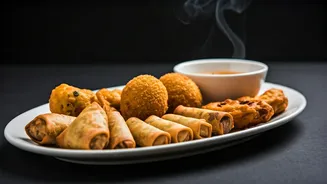
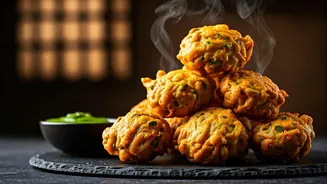
The familiar crunch of a samosa or pakora is hard to resist, but you can achieve similar satisfaction from your oven. Baked versions of these classics are becoming increasingly popular, and for good reason. A baked samosa, perhaps with a healthier multigrain wrapper, gives you that perfect combination of a crisp crust and a warm, spicy potato filling, but with a fraction of the oil. Similarly, pakoras can be made by dropping spoonfuls of vegetable-laden gram flour batter onto a baking tray and cooking until golden. The key is getting the batter right—adding a little rice flour can enhance the crispiness. You get all the comfort, the flavour, and the satisfying crunch, without the post-snack sluggishness.
The Comfort of a Warm Bowl
Nothing says cozy like curling up with a warm bowl as the rain pours down. Soups are a fantastic way to pack in flavour and nutrition. A simple tomato soup, perhaps spiced like a rasam, is both warming and invigorating. For something heartier, a lentil soup or a creamy pumpkin curry soup can feel like a complete meal. Beyond soups, a bowl of well-made masala khichdi is the ultimate Indian comfort food, often recommended in Ayurveda for the monsoon season. It's a nourishing one-pot meal of rice and lentils, which can be customised with vegetables and tempered with ghee and spices. It’s gentle on the stomach and deeply satisfying.
A Lighter Take on Chaat
The tangy, spicy, sweet, and savoury explosion of chaat is a craving that often strikes on a lazy evening. While many street-style chaats can be heavy, there are lighter, home-friendly versions perfect for the monsoon. A warm corn bhel or chaat is a perfect example. Simply mix boiled corn kernels with chopped onions, tomatoes, coriander, and a squeeze of lime, seasoned with chaat masala. Another excellent option is a cooked sprout chaat. It is advisable to cook sprouts during the monsoon to avoid bacteria. A quick blanching of moong sprouts followed by a toss with spices and vegetables creates a protein-packed snack that is both delicious and safe. Even a simple plate of poha, flattened rice sautéed with onions, peanuts, and spices, can hit the spot.
Simply Roasted Goodness
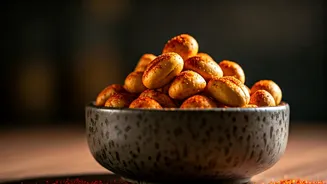
Sometimes, the simplest things are the most effective. Roasting brings out the natural flavours of ingredients and offers a satisfying crunch. The quintessential monsoon snack, bhutta (corn on the cob), is a prime example. Roasting it over an open flame at home and rubbing it with lime, salt, and chilli is an experience in itself. Another fantastic roasted snack is makhana (fox nuts). These low-calorie, high-protein puffs can be dry-roasted in a pan until crunchy and then tossed with a little salt and pepper, or any seasoning of your choice. They are incredibly light, airy, and a guilt-free way to satisfy the need for a crunchy snack while you enjoy the sound of the rain.