






The Real Secret to Building Muscle
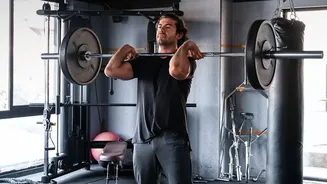
To build muscle, a process known as hypertrophy, your muscle fibres need to be challenged. Many people think this challenge can only come from a heavy barbell or dumbbell. But in reality, your muscles don’t know the difference between an expensive weight
and your own bodyweight; they only know resistance. The key principle is 'progressive overload'. This simply means you must continually make your exercises more challenging over time, forcing your muscles to adapt and grow stronger. Whether that challenge comes from lifting a heavier weight or making a bodyweight exercise harder, the physiological response is the same.
Progressing Without Adding Plates
The beauty of bodyweight training is how you can apply progressive overload without any equipment. Instead of adding more weight, you can simply adjust how you perform the exercise. One way is to increase your repetitions (reps). Once you can comfortably do 15 reps of an exercise, it's time to make it harder. You can also increase the number of sets you perform. Another effective method is to slow down the movement, also known as increasing the 'time under tension'. Try taking three to four seconds to lower yourself into a squat or push-up. You can also reduce your rest periods between sets or, most effectively, move to a more difficult variation of the exercise.
Foundational Exercises for a Full-Body Workout
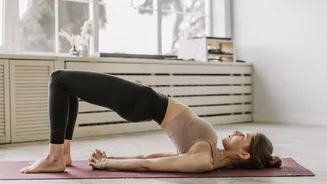
For a balanced routine, focus on compound movements that work multiple muscle groups at once. These are some of the best exercises for beginners to master: Push-ups: The ultimate upper-body exercise, working your chest, shoulders, and triceps. If a standard push-up is too hard, start with your knees on the ground or by doing them against a wall. To make it harder, elevate your feet on a chair. Squats: This fundamental movement targets your entire lower body, including your quads, hamstrings, and glutes. Focus on keeping your chest up and lowering your hips as if sitting in a chair. Planks: A core-strengthening champion, the plank engages the deep abdominal muscles that support your spine and improve posture. Try to hold it with a flat back, avoiding any sagging in your hips. Lunges: Perfect for building single-leg strength and stability, lunges work your quads, glutes, and hamstrings. * Glute Bridges: This exercise is fantastic for activating your glutes and lower back, muscles that often become weak from sitting.
Beyond Muscle: Functional Strength for Daily Life
Bodyweight exercises do more than just build muscle; they build functional strength. These movements mimic everyday actions like pushing, pulling, squatting to pick something up, and climbing stairs. By training these patterns, you’re not just getting stronger in the abstract—you’re making daily life easier and reducing your risk of injury. Because these exercises often require you to stabilize your own body, they also significantly improve your balance, coordination, and core stability, engaging smaller stabilising muscles that are often missed by machine-based workouts.