







The Anatomy of Airport Anxiety
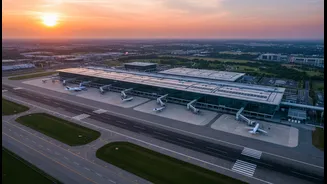
For millennials and Gen Z, the total time and stress involved in flying often outweigh the benefit of a shorter journey. The process is a gauntlet of friction points. It starts with booking weeks or months in advance to avoid surge pricing. Then comes
the journey to the airport, often located hours from the city centre, followed by the recommended two-hour pre-flight arrival buffer. Security checks, baggage drop queues, and crowded boarding gates all add to the mental load. By the time you’re in your seat, you’ve already completed a multi-hour marathon. Add the strict luggage limitations and high fees for excess baggage, and the convenience of flying starts to look less appealing. This is especially true for younger travellers who report higher levels of travel-related anxiety. The entire experience feels less like the beginning of a vacation and more like a stressful chore to be endured.
Enter the Vande Bharat Sleeper
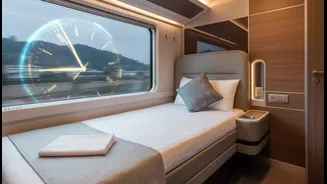
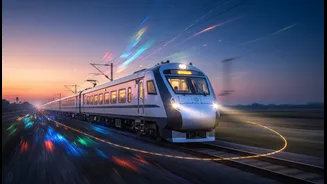
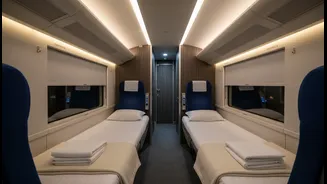
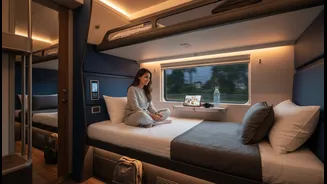
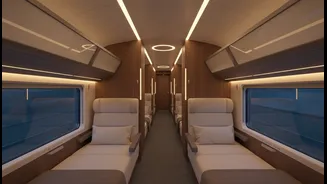
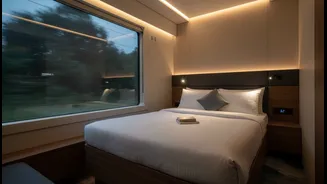
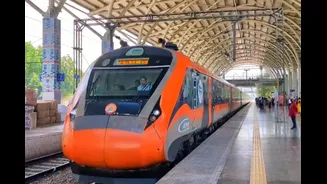
Launched in early 2026, the Vande Bharat sleeper trains are Indian Railways' answer to this modern travel dilemma. These aren't the trains of yesterday. Designed for semi-high-speed travel on long-distance routes between 800 and 1,200 kilometres, they connect major city centres overnight. The first services, such as the one between Howrah and Kamakhya, began in January 2026, with more routes like Varanasi to Amritsar and others on major corridors like Delhi-Mumbai being added throughout the year. The trains feature modern, air-conditioned coaches with AC First, Two-Tier, and Three-Tier configurations, holding over 800 passengers. Onboard amenities are a significant upgrade, including ergonomically designed berths, automatic doors, sensor-based taps, bio-vacuum toilets, and better lighting—all aimed at providing a hotel-like experience on rails.
The Overnight Advantage: Travel While You Sleep
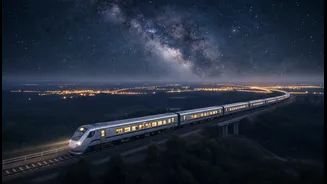
The most powerful feature of the Vande Bharat sleeper is its ability to reclaim your time. Instead of losing a whole day to travel, you get on a train in the evening from a central city station, have dinner, go to sleep in a comfortable berth, and wake up refreshed at your destination the next morning. This effectively turns dead travel time into productive rest time. A journey on the Varanasi-Chheharta (Amritsar) route, for example, departs in the evening and arrives the next day, allowing for a full night's sleep. This model saves you the cost of a hotel night and, more importantly, gives you back a full day for work or leisure at your destination. The gentle rocking of the train is often more conducive to sleep than the cramped, upright position on a red-eye flight.
From City Heart to City Heart
One of the most underappreciated costs of air travel is last-mile connectivity. Airports are almost always on the outskirts of a city, requiring long and expensive cab rides. In contrast, major railway stations like Howrah, Varanasi, or Mumbai Central are located right in the heart of the city. Arriving on a Vande Bharat sleeper means you step off the platform and are immediately connected to the city's public transport and key business or tourist areas. This simple fact can save travellers hours of commute time and significant expense, completely bypassing the airport transfer rush. When you factor in the total door-to-door journey, the seemingly slower train can often be just as fast, if not faster, than flying on routes under 1000 km.
A More Mindful Way to Travel
Beyond the practical benefits of time and cost, the sleeper train offers a fundamentally different travel experience. It encourages a slower, more mindful pace that resonates with a generation grappling with burnout. You can carry more luggage without exorbitant fees, sit down for a proper meal, work comfortably on a laptop with available power outlets, or simply watch the landscape change through wide windows. There's a sense of journey and connection to the country you're travelling through that a flight at 30,000 feet can never offer. It shifts the focus from merely reaching a destination to enjoying the act of getting there, turning travel back into a source of relaxation rather than stress.