



How AI Detectors 'See' an Image
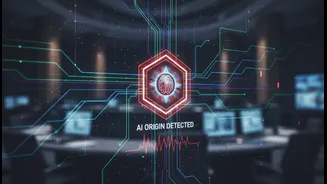
AI image detectors are essentially digital forensics tools. They don't 'see' an image like a human does; instead, they are trained on millions of real and AI-generated images to recognize subtle patterns. They scan for digital fingerprints left behind
by generative AI models, analyzing things like unnatural textures, illogical lighting and shadows, and pixel-level inconsistencies that our eyes might miss. Some detectors also analyze an image's metadata or look for invisible digital watermarks that some AI models embed. Think of them as classifiers that analyze various signals to estimate the probability that an image is synthetic. They don't provide a simple yes or no, but a percentage of likelihood.
The Constant Cat-and-Mouse Game
The world of AI is a race between creation and detection. As generative AI models become more sophisticated, they get better at covering their tracks. The very artifacts that detectors are trained to spot—like weird hands or nonsensical backgrounds—are constantly being improved upon by new versions of AI generators. This means detection tools must be continually updated to keep pace. Simple acts like taking a screenshot, resizing an image, or the compression that automatically happens when you upload to social media can strip away the subtle clues the detectors rely on, making their job much harder. An image that is easily identifiable as AI in its original form may become undetectable after being shared a few times.
The Problem with False Positives
One of the biggest challenges with AI detectors is the risk of a 'false positive'—when the tool mistakenly flags a real photograph as being AI-generated. This can happen for many reasons. Heavily edited photos, images taken in a studio with very clean lighting, or pictures processed with AI-powered noise reduction can share statistical properties with synthetic images, confusing the detector. For professional photographers and artists, being wrongly accused of passing off AI work as their own can be damaging to their reputation. Research has also shown that some detectors may be biased, more likely to flag content from non-native English speakers as AI-generated due to sentence structures they've been trained on. This highlights a critical point: a detector's result is an estimate, not a verdict.
A Guide for Newsrooms
For journalists, the stakes are incredibly high. Publishing a fake image can destroy credibility. Newsrooms should treat AI detectors as just one part of a broader verification workflow, not a definitive answer. A recommended practice is a triage system, where high-risk images (related to politics, disasters, or public safety) require multiple checks. This includes using a detector but also conducting reverse image searches, checking metadata when available, and, most importantly, verifying the source of the image. The goal isn't to achieve perfect detection, but to build a reliable process that prioritizes accuracy and transparency. Documenting this verification process within editorial guidelines protects the newsroom and builds audience trust.
What Creators and Social Media Users Should Know
For creators, the rise of AI offers tools for rapid content generation, but it comes with the risk of audiences feeling that content is inauthentic. For social media users, the adage "don't believe everything you see" has never been more relevant. Before sharing a viral image, it's wise to practice healthy skepticism. Check the source of the post. Look at the comments to see if others have pointed out inconsistencies. While an AI detector can be a useful first check, its result shouldn't be the final word. The most powerful tool remains human critical thinking. An awareness that any image could be manipulated is the first and most important line of defense against the spread of misinformation.