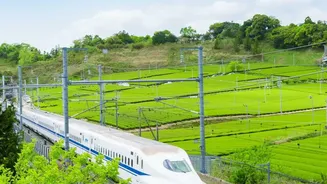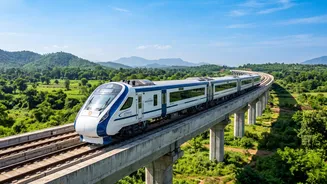






India's dream of high-speed rail is rapidly transforming into reality. The nation's first bullet train is slated to begin operations in 2027, and the inaugural journey will take place not on the entire Mumbai-Ahmedabad line, but on a crucial priority
section.
The First Step: Surat to Vapi
The first commercial bullet train service in India will connect the bustling commercial hubs of Surat and Vapi in Gujarat. This section is part of the larger 508-kilometre Mumbai-Ahmedabad High-Speed Rail (MAHSR) corridor. Officials have targeted the last quarter of 2027 for the launch of passenger services on this stretch. The decision to operationalise the line in phases allows the ready sections to be opened to the public while construction continues on more complex parts of the route, particularly in Maharashtra. This phased approach signifies a major milestone, turning years of planning and construction into a tangible travel option for the public.
A Major Milestone: Powering Up the Tracks
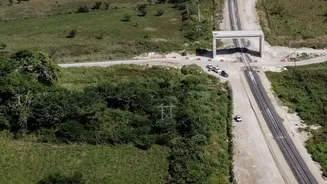
A significant step towards the 2027 goal was achieved in late November 2026, when the overhead electrical equipment for a 50-kilometre stretch between Surat and Bilimora was successfully energised. This crucial 'power-up' prepares the section for a series of integrated tests and trial runs. The project utilises an advanced 2x25 kV overhead traction system, a technology standard in high-speed rail networks globally, designed to supply consistent power for trains travelling at high speeds. With electrification work complete and signalling work on this section expected to be finished by January 2027, the path is clear for trial runs to potentially begin by May 2027.
More Than Just Speed: The Broader Impact
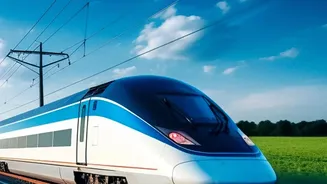
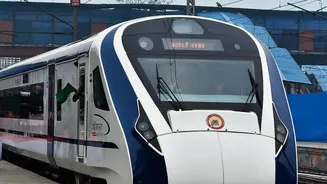
The bullet train promises more than just a reduction in travel time; it represents a technological and economic leap for the nation. The full corridor, once complete, is expected to shrink the journey between Mumbai and Ahmedabad to just under two hours. The project, being developed with technical and financial cooperation from Japan, is based on the world-renowned Shinkansen system. Beyond the immediate benefits for passengers, the MAHSR project is fostering a domestic manufacturing ecosystem under the 'Make in India' initiative. An indigenous high-speed train, capable of speeds up to 280 kmph, is being developed by BEML and Integral Coach Factory and is expected to be used for the initial runs.
Overcoming Hurdles on a Long Road
The journey to India's first bullet train has not been without its challenges. The project has faced significant delays, with the original 2022 deadline missed. According to Railway Minister Ashwini Vaishnaw, these delays were largely due to issues with land acquisition in Maharashtra and the impact of the COVID-19 pandemic, with serious construction only getting underway in 2021. The project's cost has also escalated to nearly ₹2 trillion from an initial estimate of ₹1.08 trillion. Furthermore, complex engineering feats, such as India's first undersea rail tunnel in Maharashtra, require meticulous and time-consuming work.
The Blueprint for India's Future
The Mumbai-Ahmedabad corridor is not just a standalone project; it is the blueprint for a national high-speed rail network. The experience, technology, and construction methodologies being established are intended to create a replicable model for future corridors. Seven other high-speed routes, covering nearly 4,000 kilometres, have already been identified for future development. The successful launch of the Surat-Vapi section will therefore serve as a powerful proof of concept, demonstrating India's capability to execute such complex infrastructure projects and paving the way for a new chapter in Indian transportation.