






The Friday night dilemma is real: brave the traffic for a big screen blockbuster or sink into the sofa for a streaming premiere? This choice has become the central question for Indian movie lovers, reshaping how Bollywood makes and sells its films.
The Undeniable Pull of the Big Screen
There
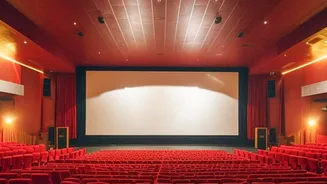
is an experience that a streaming platform cannot replicate: the collective thrill of watching a film in a dark theatre. The gigantic screen, the immersive sound, and the shared gasps and laughs of a crowd create a unique social event. This is the primary domain of the 'event film'. Grand-scale productions, action spectacles, and movies led by major stars are built for this environment. Multiplexes have also enhanced this experience, offering premium options like IMAX and recliner seating to justify the ticket price. The box office has seen a strong resurgence, with the first half of 2026 showing record collections, proving that audiences will turn up for the right kind of cinematic spectacle. For these larger-than-life stories, the theatre is not just a venue; it's part of the show.
The Unbeatable Convenience of the Couch
On the other side of the debate is the sheer convenience and value offered by Over-the-Top (OTT) platforms. For the cost of one or two multiplex tickets, a family can access a vast library of content for a month. This economic advantage, combined with the flexibility to watch anytime, anywhere, is a powerful draw. The pandemic significantly accelerated this shift, forcing audiences into their homes and making streaming the primary mode of entertainment. This period conditioned viewers to expect new content at their fingertips. Factors like cost, convenience, and a wide variety of content are the main drivers for audiences choosing streaming. Urban youth, in particular, are drawn to the on-demand nature and diverse content available on these platforms.
Content Decides Its Own Destiny
The debate is no longer a simple binary; it's about matching the content to the platform. A consensus is emerging in the industry: not every film is made for a massive theatrical release. Small to mid-budget films, experimental narratives, or content-driven stories that might get lost in the marketing blitz of a blockbuster often find a more sustainable and profitable life on OTT platforms. Streaming services provide a global stage for films that may have a niche theatrical audience, ensuring they find their viewers. Conversely, the industry has seen that direct-to-OTT premieres for big-budget films, a pandemic-era necessity, are becoming less common. Filmmakers are now making a more conscious choice, asking whether a story's strength lies in its spectacle, demanding a theatre, or its intimacy, better suited for home viewing.
The Eight-Week Window: A Return to Order
A key factor in the audience's decision-making has been the theatrical window—the exclusive period a film plays in cinemas before moving to OTT. During the pandemic, this window shrank to as little as four weeks, which many experts believe conditioned audiences to simply wait for the digital release. In response, the industry has largely reverted to an eight-week window for Hindi films. This move is designed to give films a proper chance at the box office and restore the primacy of the theatrical experience. While some South Indian industries still operate on a shorter four-week window, the trend for Bollywood is clear: give cinemas breathing room. This assures viewers that if they want to see a major new film, the theatre is the only place to do so for nearly two months.
A Future of Coexistence, Not Competition
The narrative of 'OTT killing the theatrical experience' appears to be an oversimplification. The future points towards a hybrid model where both platforms coexist and even complement each other. Box office performance is still a major benchmark for how a film's streaming rights are valued. A successful theatrical run can generate significant buzz, which then translates to high viewership when the film eventually lands on a streaming service. Audiences have shown they are willing to pay for both experiences. They will venture out to theatres for the big, communal events, while relying on OTT platforms for a steady stream of diverse and convenient entertainment. The choice is no longer 'either/or' but 'when and for what'.