




A New Contender in Our Cosmic Backyard
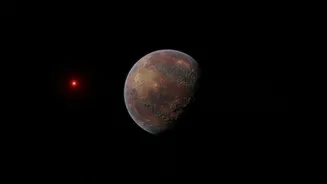
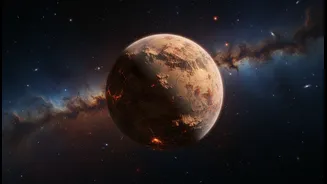
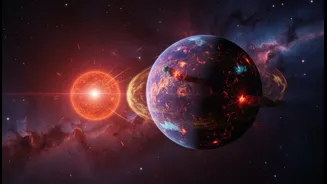
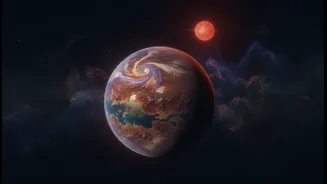
In the vast expanse of the Milky Way, 25 light-years may not seem like much. For astronomers, it’s practically next door. That’s the distance to GJ 3378b, a planet orbiting a red dwarf star in the constellation Camelopardalis. While initially identified
as a candidate planet in 2024, recent analysis has confirmed its existence and provided a much clearer picture of its potential. A team of astronomers, using data from multiple telescopes, refined earlier measurements to reveal a world that ticks many of the boxes in the search for habitable planets. This wasn't just another blip in the data; it was a significant update on a world that suddenly looked a lot more interesting.
The 'Goldilocks' Planet We've Been Searching For?
The excitement hinges on a few key details. GJ 3378b is a 'super-Earth,' a rocky world estimated to be about 2.3 times the mass of our own planet. Crucially, new measurements show it’s lighter than first thought, which increases the likelihood that it’s a terrestrial planet rather than a gassy mini-Neptune. This world completes an orbit around its star in just over 21 days, but because its star is much cooler and dimmer than our sun, this places it squarely in the 'habitable zone'. This is the so-called 'Goldilocks' region where conditions could be just right for liquid water to exist on the surface—a key ingredient for life as we know it. Scientists calculate that GJ 3378b receives about 90% of the solar radiation that Earth gets from the Sun, putting it in a tantalizing sweet spot.
The Atmosphere: A Decisive Question
Location is one thing, but atmosphere is everything. The biggest question mark hanging over GJ 3378b is whether it has one. The planet is located on the edge of what scientists call the 'cosmic shoreline'—a boundary where a star's radiation can be intense enough to strip away a planet’s atmosphere over billions of years. Many red dwarf stars are known for being volatile, unleashing powerful flares that can render nearby planets sterile. However, GJ 3378 is a relatively quiet star, which raises hopes. If GJ 3378b has managed to hold onto its atmosphere, it becomes one of the most compelling targets for future study. Without an atmosphere, the chances for surface liquid water—and life—plummet.
What Happens Next in the Search?
Confirming the existence and basic properties of GJ 3378b is just the first step. The next, much harder, step is to actually study its atmosphere. Since the planet does not appear to pass directly in front of its star from our point of view (a method called transiting), scientists cannot use telescopes like the James Webb Space Telescope to easily sniff out the chemical composition of its air. This means getting a definitive answer will be challenging. Astronomers will have to wait for even more powerful future observatories, such as NASA's planned Habitable Worlds Observatory slated for the 2040s, which is being designed to directly image planets like GJ 3378b and analyze their atmospheres. The goal is to hunt for biosignatures—gases like oxygen or methane that could indicate the presence of biological processes.