






A Return to Authenticity
There is a tangible shift happening in the modern Indian home. For years, convenience and affordability made factory-made goods the default choice. But in response to this uniformity, many are now seeking pieces with a story, a soul, and a visible human
touch. This movement isn't just about nostalgia; it’s a conscious choice for individuality and sustainability. Homeowners are increasingly aware of the cultural and environmental cost of mass production and are choosing to invest in products that last, both in quality and in style. Handcrafted items, once seen as purely decorative or rustic, are now being celebrated for their ability to bring character and warmth into otherwise minimalist spaces.
Pottery: From Village Wheel to Urban Table
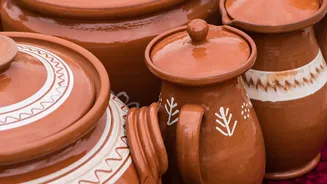
The humble clay pot has undergone a remarkable transformation. Traditional Indian pottery, with its deep roots in utility and ritual, is finding new life in contemporary kitchens and living rooms. Artisans from pottery hubs like Khurja in Uttar Pradesh and regions across Rajasthan are now crafting items that blend ancient techniques with modern aesthetics. Think of terracotta water bottles that keep water naturally cool, minimalist ceramic dinnerware with subtle glazes, and sculptural vases that serve as art pieces. These products move beyond the purely functional, offering a blend of form and purpose that appeals to modern sensibilities. Electric diffusers made of clay are replacing plastic ones, and simple, hand-thrown mugs are becoming a statement of sustainable style.
Weaving: New Stories in Every Thread
Similarly, India's rich handloom traditions are being woven into the fabric of modern interiors in exciting new ways. Weavers who have for generations created intricate sarees and fabrics are now applying their skills to a range of home utility products. Hand-woven textiles introduce texture, colour, and a sense of regional identity that mass-produced fabrics cannot replicate. Ancient weaving techniques like Ikat, with its distinctive blurred patterns, and block-printing methods like Ajrakh are now found on cushion covers, table runners, and contemporary wall hangings. These pieces are not just about covering a surface; they are about layering a room with history, craft, and a tactile quality that feels both luxurious and grounded.
Bridging the Gap Between Artisan and Apartment
This renaissance is being fuelled by a crucial connection between rural artisans and urban consumers. Design studios are collaborating with artisan clusters, helping to refine products for a contemporary market while preserving the integrity of their craft. This intervention helps in adapting traditional forms for modern use—for example, turning a classic woven mat technique into a stylish lampshade or storage basket. Furthermore, the rise of e-commerce platforms and social media has been transformative. These digital marketplaces give artisans direct access to customers, allowing them to tell their own stories, command fair prices, and build sustainable livelihoods without relying solely on intermediaries. It's a digital-age solution for an age-old craft.