




A Surprising Democratic Threat
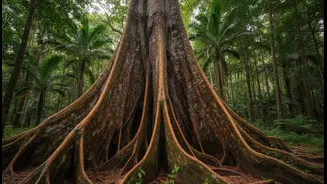
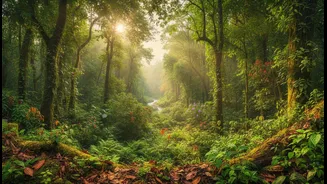
For a long time, ecological theory held that the tallest trees in a tropical forest were the most vulnerable to drought. It seems logical: pumping water hundreds of feet into the air against gravity is an immense task, and any water scarcity should, in theory,
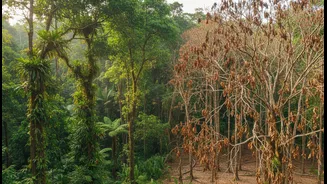
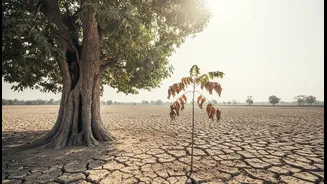
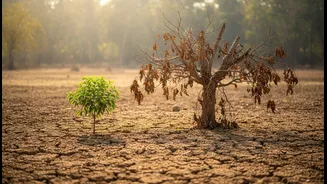
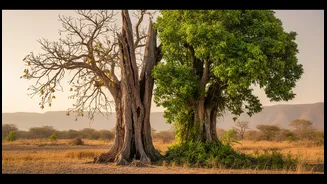
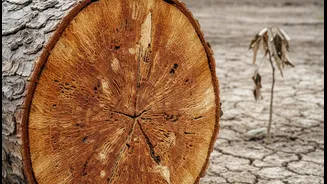
hit these giants the hardest. However, emerging research is painting a more complicated and concerning picture. Recent studies are challenging this assumption, showing that drought is an equal-opportunity threat. While giant trees are indeed susceptible to stress, so are their smaller counterparts, often for entirely different reasons. One 2021 study noted that taller forests did indeed experience greater water-related stress during drought. Yet another, more recent study from July 2026, found that some of the tallest tropical trees have evolved sophisticated adaptations, such as widening their water-carrying vessels (xylem) at the base, to cope with the challenge of their height. This suggests they are not inherently more vulnerable than smaller trees under the same drought conditions. This overturns a key belief and forces scientists to reconsider how these complex ecosystems function.
The Science of a Thirsty Tree
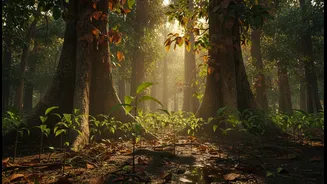
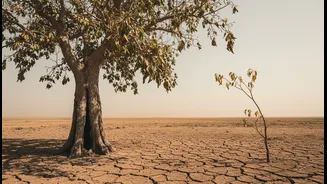
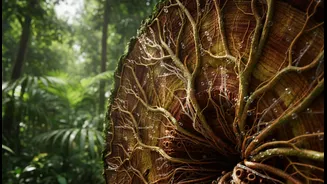
To understand the risk, we need to think about a tree's internal plumbing. Trees constantly pull water from the soil up to their leaves, where it evaporates in a process called transpiration. This flow is what keeps the tree hydrated and cool. A drought disrupts this entire system. For towering trees, the risk can be hydraulic failure; the column of water inside their xylem can break under tension, causing a catastrophic blockage akin to an embolism. They are also more exposed to drying winds and atmospheric water stress. Smaller, understory trees face a different battle. They might not have to fight gravity as much, but they often exist in a more competitive environment for soil moisture. As the ground dries out, they may simply be unable to access enough water, leading to desiccation and death. The specific conditions, such as the type of soil and the intensity of the drought, can determine which trees suffer most. Essentially, there is no single, simple story of drought survival; it’s a complex interplay of a tree's size, species, and its immediate microenvironment.
The Forecasting Challenge in a Warming World
This new, nuanced understanding makes the job of forecasting the future of tropical forests both harder and more critical. These forests are not just beautiful landscapes; they are the planet's lungs, absorbing enormous amounts of carbon dioxide. Climate models that predict how these carbon sinks will fare in a hotter, drier world have often relied on simplified assumptions, such as large trees being the most vulnerable. If these assumptions are wrong, our predictions for how much carbon these forests can continue to store will also be wrong. Scientists are now working to build this more complex, height-dependent understanding of drought response into next-generation ecosystem models. Predicting which forests will survive, which will transition into drier savannas, and which might collapse altogether is a central challenge in climate science. Getting it right is essential for everything from global carbon budgets to local conservation efforts.
Why This Matters for India
The fate of tropical forests is not a distant, abstract problem; it's a pressing issue for India. From the lush Western Ghats to the biodiverse forests of the Northeast, India is home to critical tropical ecosystems. These forests face the dual threats of climate change—including more frequent and intense droughts—and human activity. Studies have shown that while some of India's wetter forests show resilience, those in drier regions are highly vulnerable to shifts in rainfall. Concurrent heatwaves and droughts are becoming more common, creating a 'double whammy' of stress that can lead to large-scale tree mortality. Understanding the specific vulnerabilities of different tree species and sizes is crucial for effective forest management. As climate change continues, accurate forecasting will help determine which areas need the most protection and what strategies can help maintain the health of these vital natural resources that regulate water cycles, prevent soil erosion, and support countless livelihoods.