


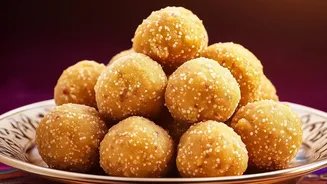
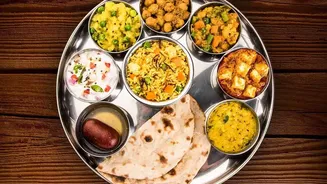
1. Makhan Mishri
No Janmashtami bhog is complete without Makhan Mishri, a tribute to Krishna's famous childhood moniker, 'Makhan Chor' (butter thief). This offering is the simplest yet most significant, symbolizing purity and devotion. It consists of just two ingredients:
freshly churned, unsalted white butter (makhan) and rock sugar (mishri). The preparation requires no cooking; the butter is simply mixed with coarsely crushed mishri, retaining a satisfying crunch that contrasts with the butter's creaminess. Placed in a small clay or silver bowl with a Tulsi leaf on top, it represents a direct and heartfelt offering to the deity, celebrating his love for simple, homemade treats.
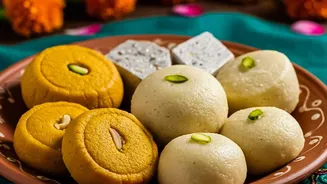
2. Mathura Peda
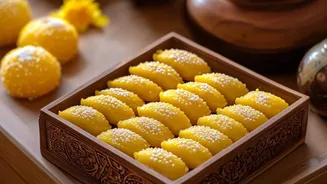
Originating from Lord Krishna's birthplace, Mathura Peda holds a special place in Janmashtami celebrations. This iconic sweet embodies the culinary heritage and devotional spirit of Mathura. It is prepared by slowly cooking khoya (milk solids) with sugar until it caramelizes into a rich, brown-hued, grainy texture. The mixture is then flavoured with cardamom and shaped into small, flattened discs. Offering Mathura Peda is like bringing a piece of Krishna's own land to the puja, making it a deeply meaningful and authentic choice for bhog. Its popularity is so immense that it has become synonymous with the city itself.
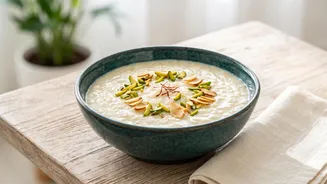
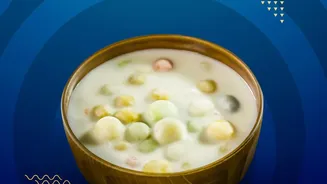
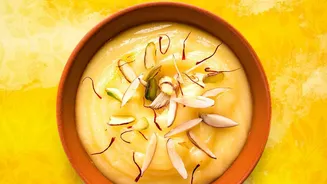
3. Mewa Kheer
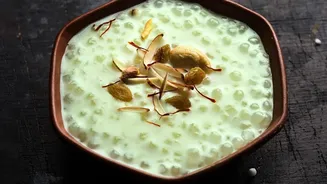
Kheer, a fragrant rice pudding, is a festive staple across India, and its Janmashtami version is especially rich. Often called Mewa Kheer, it is made by simmering full-cream milk for a long time until it thickens naturally. Basmati rice, nuts, and dried fruits like cashews, almonds, and chironji are added to create a luxurious texture. The sweet is finished with a hint of cardamom and saffron, lending it a royal aroma and golden colour. This slow-cooked delicacy is often reserved for the midnight feast that marks Krishna's birth. Its comforting warmth and wholesome goodness make it a perfect offering to celebrate the divine arrival.
4. Kalakand
Kalakand is a soft, grainy milk cake that beautifully fits the dairy-centric theme of Janmashtami. Its preparation involves curdling milk with an acidic agent like lemon juice, then simmering the resulting chenna with condensed milk or khoya until it thickens into a dense, moist block. The mixture is then set and cut into squares. Often garnished with chopped pistachios, Kalakand offers a melt-in-the-mouth texture and a delicate sweetness. Its familiar, rich milk flavour connects intuitively with the pastoral tales of Krishna's childhood in Gokul, making it a beloved and appropriate sweet for the festive spread.
5. Gopalkala
While most bhog items are sweet, Gopalkala offers a unique savoury-sweet profile. This Maharashtrian dish is believed to be reminiscent of the simple meal Krishna shared with his fellow cowherds (gopas). It’s a no-cook recipe that combines soaked flattened rice (poha) with curd, chopped cucumber, fresh coconut, and a tempering of ghee, cumin seeds, and green chillies. It is both refreshing and substantial. Sometimes fruits like pomegranate are also added. Gopalkala represents community and friendship, making it a meaningful and less conventional dairy-based offering for Janmashtami.